
The "Dual Encoding" Memory Method, Popular in Academia, and Its Four Applications in Daily Learning
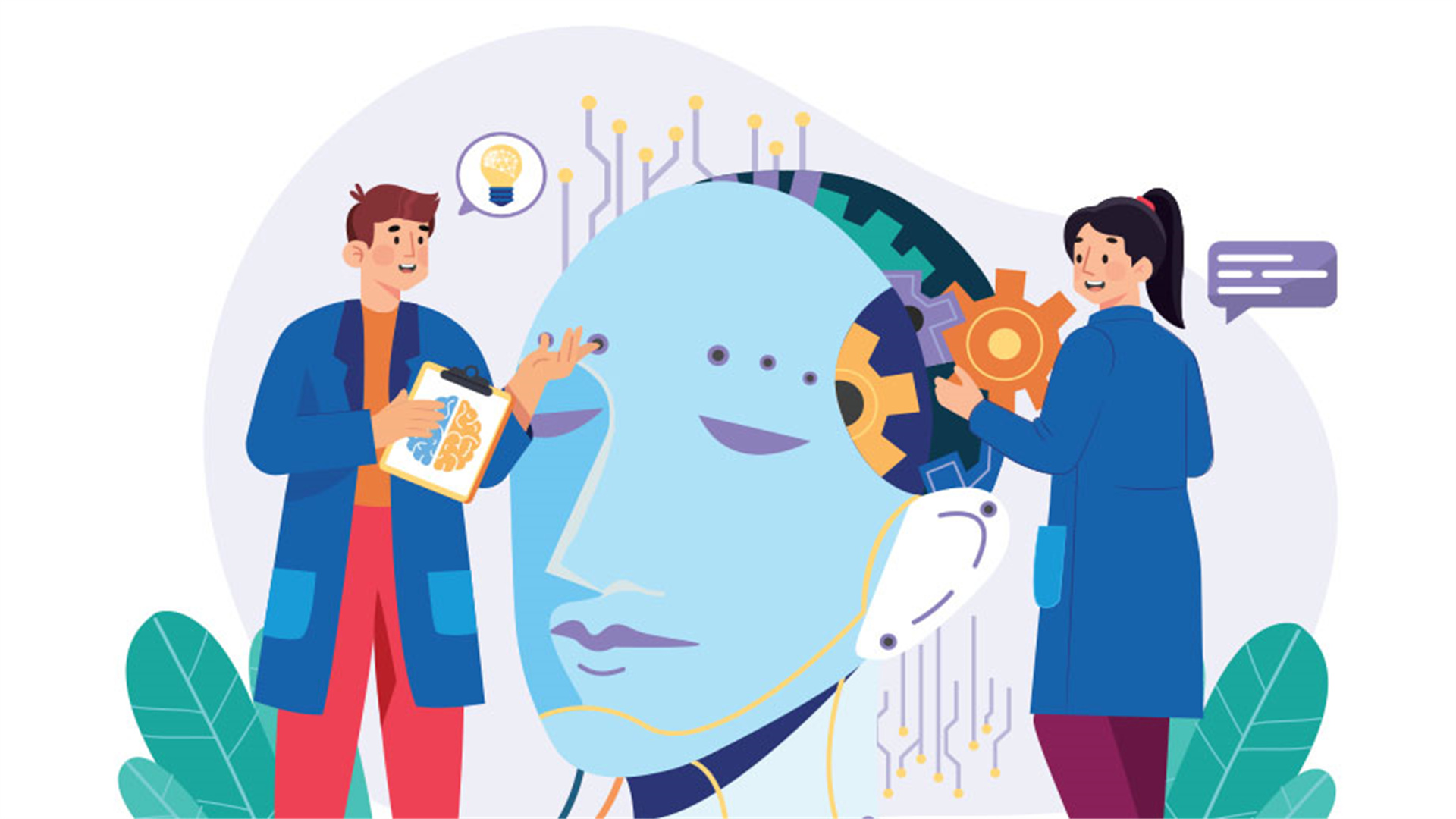 In the relentless pursuit of academic excellence and efficient knowledge retention, learners and researchers are constantly seeking powerful cognitive tools. One method that has gained significant traction within academic circles is the Dual Encoding Theory (DET), a cognitive theory proposed by psychologist Allan Paivio. At its core, Dual Encoding posits that information presented both visually and verbally is recalled more easily and accurately than information presented in only one format. This is because our brains possess two partially independent yet interconnected systems for processing information: one for verbal language (words, sentences) and one for non-verbal imagery (pictures, sounds, sensations). When we encode information using both "channels"—for instance, by linking a concept to a mental image or a diagram—we create two distinct memory traces. These traces reinforce each other, providing multiple pathways for retrieval and making the memory more robust and resistant to forgetting.
While its roots are deeply embedded in psychological research, the true power of the Dual Encoding Method lies in its practical applicability far beyond laboratory experiments. It is not merely an abstract theory but a versatile strategy that can transform how we approach learning in everyday life. From mastering a new language to preparing for a critical presentation, consciously engaging both our verbal and visual cognitive systems can lead to profound improvements in comprehension, retention, and recall. This article will demystify this academically revered method and detail four concrete, powerful applications you can integrate into your daily learning routine to study smarter, not harder.
1. 🔤 Mastering Vocabulary and Language Acquisition
Language learning is one of the most direct and rewarding applications of the Dual Encoding Method. Rote memorization of word lists is a classic example of single-channel (verbal) encoding, which is often inefficient. Dual Encoding supercharges this process by attaching vivid, sensory-rich imagery to new words.
1.1 The Keyword Method with a Visual Twist
This classic technique involves linking a new foreign word to a familiar word in your native language (the keyword) that sounds similar. Dual Encoding elevates this by insisting on creating a bizarre, vivid mental image that connects the keyword's meaning with the target word's meaning. For example, to remember the Spanish word "caballo" (horse), you might use the keyword "cab." Now, don't just think "cab." Instead, visualize a bright yellow taxi cab with a horse's head sticking out of the sunroof, neighing loudly as it drives down the street. This bizarre image engages the visual channel powerfully alongside the verbal link ("cab" - "caballo").
1.2 Creating Pictorial Flashcards
Move beyond text-only flashcards. On one side, write the word or phrase. On the other, instead of just the translation, draw a simple sketch that represents the word's meaning. The act of drawing itself is a powerful encoding process. For abstract words, think metaphorically. For "esperanza" (hope), you might draw a small plant sprouting from a crack in concrete. Whenever you review, you are retrieving both the verbal label and the visual concept.
1.3 Contextual Imagery in Stories
When learning phrases or grammatical structures, place them within an imagined visual scene. Instead of memorizing "Je vais à la bibliothèque" (I am going to the library) as a string of words, close your eyes and visualize yourself walking your specific route to your local library, feeling the books, seeing the shelves. Embed the verbal phrase into a rich mental movie.

2. 📚 Conquering Complex Concepts and Textbook Material
Academic subjects like biology, history, economics, and philosophy are filled with intricate theories, multi-step processes, and interconnected ideas. Dual Encoding is the key to moving from superficial recognition to deep understanding.
2.1 Transforming Text into Diagrams and Mind Maps
After reading a dense chapter, put the book aside. Your task is not to copy text but to synthesize it into a visual format. Create a concept map, a flow chart, or a mind map. Use shapes, colors, arrows, and icons to represent ideas, relationships, hierarchies, and cause-effect dynamics. For instance, the process of photosynthesis can be drawn as a factory (the chloroplast) with inputs (sunlight, water, CO2) and outputs (glucose, O2). This visual model, paired with your notes, encodes the information twice.
2.2 The Power of Sketch Notes
During a lecture or while watching an educational video, practice sketch noting. Combine concise written keywords with quick drawings, symbols, and connectors. This forces you to listen for the core ideas (verbal processing) and immediately represent them visually, ensuring active engagement with both systems simultaneously.
2.3 Annotating with Icons and Marginal Drawings
As you read, develop a personal system of visual annotation. Draw a lightbulb next to a key insight, a question mark next to something confusing, a chain icon to link two related ideas on different pages, or a simple stick-figure scene in the margin to depict a historical event or scientific phenomenon. These small visual cues create powerful retrieval hooks.

3. 🧠 Memorizing Sequences, Procedures, and Speeches
Whether it's the steps of a software workflow, the order of historical events, a recipe, or the key points of a speech, sequential information benefits immensely from Dual Encoding. The classic "Memory Palace" or "Method of Loci" technique is a pinnacle application of this principle.
3.1 Building a Memory Palace
This ancient technique leverages our superior spatial memory. To memorize a list or sequence, visualize a familiar place (your home, your commute). Mentally "place" vivid, symbolic images representing each item on your list at specific, ordered locations (the doormat, the coat rack, the sofa). To recall, simply take a mental walk through your palace. The sequence is fixed by the spatial layout (visual-spatial channel), and each item is represented by an image (visual-imagery channel) linked to a concept (verbal channel).
3.2 Visual Story Linking for Procedures
To remember a procedure like CPR steps (Check scene, Call for help, Check breathing, etc.), create an exaggerated, narrative mental movie. Imagine a giant, animated "Scene" magnifying glass checking the area, a superhero "Calling" on a giant phone, a dragon gently checking a patient's "Breathing" with its ear. The more absurd and sensory-rich the story, the more memorable the sequence becomes.
3.3 Speech and Presentation Preparation
Instead of memorizing a speech word-for-word, structure it as a journey through a series of images or locations. Each main point is a "station" in your Memory Palace or a key frame in your mental movie. The visual sequence guides your narrative flow, making you less reliant on notes and more naturally expressive.
4. 📈 Enhancing Professional and Personal Knowledge Integration
Dual Encoding isn't just for formal study; it's a lifelong learning tool. It can be used to understand complex reports, plan projects, integrate new skills, and even remember names and faces.
4.1 Deconstructing Reports and Articles
When faced with a complex business report or long-form article, use dual encoding to digest it. As you read, create a one-page visual summary. Use a central metaphor (e.g., the company as a ship), with icons representing challenges (storm clouds), strategies (sails), financials (treasure chest), and goals (a lighthouse). This creates a consolidated, memorable overview far more effective than pages of highlighted text.
4.2 Project Planning with Visual Frameworks
Apply dual encoding to planning. Tools like Gantt charts, Kanban boards (like Trello), and system diagrams are applications of DET. They translate project tasks, timelines, and dependencies (verbal/abstract data) into a visual-spatial layout that the brain can grasp and remember intuitively.
4.3 Remembering People
To remember a name, employ the basic dual encoding principle: link the person's name to a distinctive visual feature in an exaggerated way. For "Mr. Green," imagine his hair turning into lush green grass. For "Anita," you might picture her saying "I need a..." (a-need-a). The visual association, however silly, creates a durable link between the face (visual) and the name (verbal).

5. 💡 Conclusion: Making Dual Encoding a Habit for Lifelong Learning
The Dual Encoding Memory Method is far more than an academic curiosity; it is a fundamental principle of how our brains optimally learn and remember. By consciously partnering words with images, abstract concepts with concrete metaphors, and lists with spatial journeys, we work in harmony with our cognitive architecture. The four applications outlined here—language learning, mastering complex concepts, memorizing sequences, and integrating professional knowledge—are merely starting points. The underlying strategy is universal: whenever you learn something new, ask yourself, "How can I represent this visually?" and "What image, diagram, or spatial metaphor can I link this to?"
Initially, this may feel slower than passive reading or re-writing notes. However, this initial investment in deeper encoding pays exponential dividends in long-term retention, faster recall, and clearer understanding. It transforms learning from a chore of accumulation into an act of creative construction. Start small by adding a simple drawing to your next vocabulary word or sketching a mind map for a single article. As you practice, you will cultivate a powerful, intuitive learning habit that leverages the full, dual-channel capacity of your remarkable mind, making you a more effective and agile learner in every area of your life.
You May Have Missed

Two Different Cognitive Recovery Strategies for Managing Acute and Chronic Stress
In contemporary life, stress has evolved into a pervasive issue, affecting individuals across all demographics. With increasing workloads, social pressures, and global uncertainties, the ability to manage stress effectively is no longer a luxury but a necessity for maintaining overall health and productivity. This article delves into the distinct cognitive recovery strategies tailored for acute and chronic stress, providing a roadmap for individuals to navigate these challenges with resilience and clarity.
Are "Brain Development" Courses a Tax on Intelligence?
In recent years, the proliferation of "brain development" or "cognitive training" courses has sparked intense debate among educators, scientists, and consumers worldwide. Marketed as tools to enhance memory, focus, problem-solving skills, and overall intelligence, these programs—often available online or through specialized apps—promise to unlock human potential for a fee. However, a critical question arises: are these courses a legitimate investment in self-improvement, or do they represent a modern "tax on intelligence," exploiting societal anxieties about cognitive decline and competitive advantage? This article delves into the phenomenon, examining the claims, science, costs, and ethical implications of brain development courses. By analyzing evidence from cognitive research, consumer trends, and expert opinions, we aim to unravel whether these programs offer tangible benefits or merely levy a financial and psychological toll on those seeking intellectual growth. The concept of a "tax" here metaphorically suggests an imposed burden—whether monetary or mental—that may not yield proportional returns, echoing concerns about pseudoscience and commercial exploitation in the wellness and education sectors.
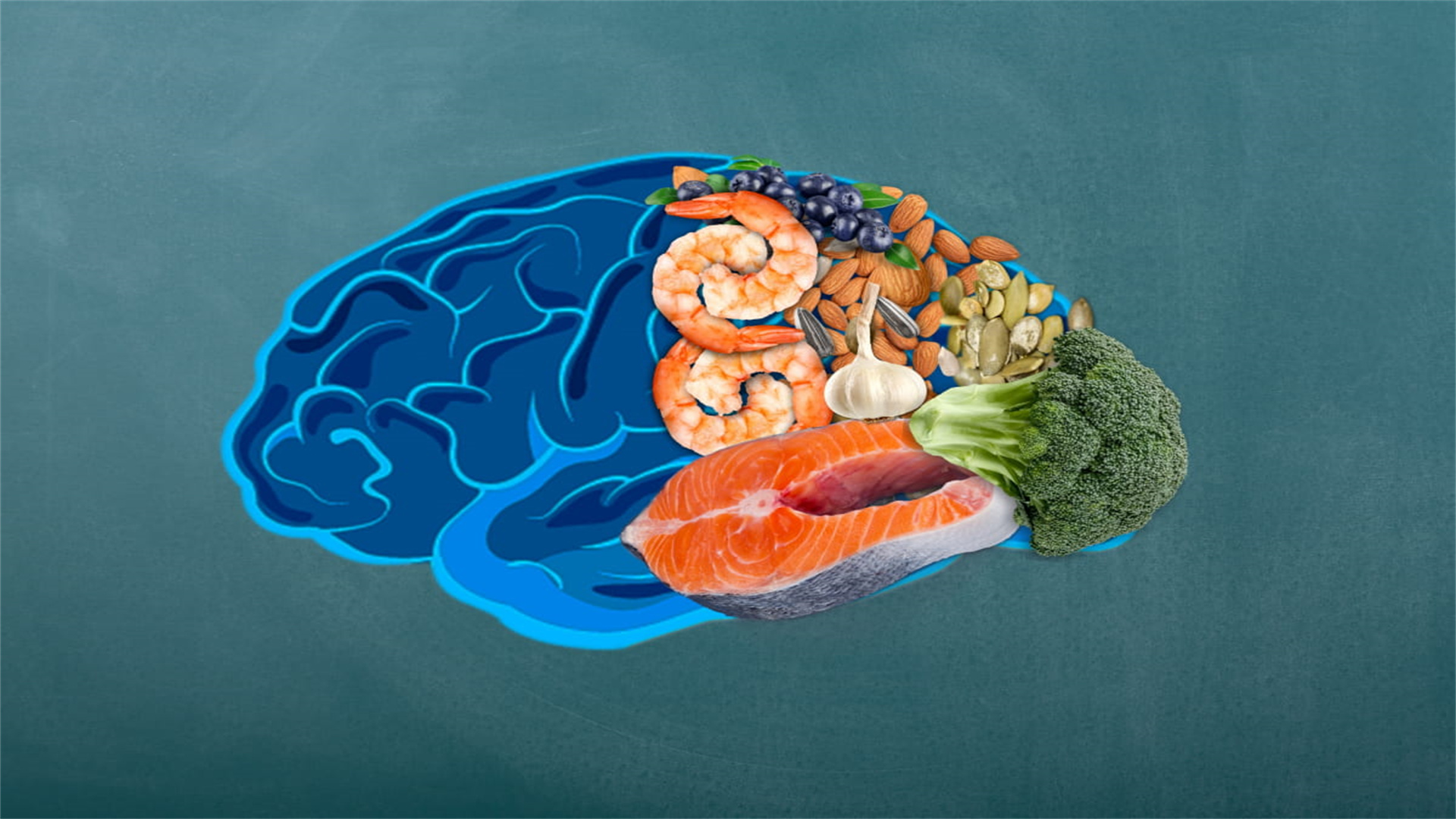
Nutritional Neuroscience Reveals Three Core Nutrients for Enhancing Focus and Memory
For decades, the quest for sharper focus and a more resilient memory has led many down paths of brain-training apps, productivity hacks, and sheer willpower. However, emerging research from the field of nutritional neuroscience is illuminating a fundamental truth: the building blocks of our cognitive prowess are found not in an app store, but on our plates. This interdisciplinary science explores the profound connection between the nutrients we consume and the structure, function, and performance of our brains. It moves beyond general advice like "eat healthy" to pinpoint specific dietary components that directly influence neural pathways, neurotransmitter synthesis, and neuroprotection. This article delves into the core findings of nutritional neuroscience, unveiling three essential nutrient groups that are scientifically validated to enhance concentration, support memory formation, and protect cognitive longevity. By understanding and incorporating these nutrients, we can make informed, powerful choices to fuel our mental clarity and cognitive health.
We focus on sharing high-quality original content covering diverse fields such as technology & digital, life essays, and practical useful tips. We polish every article with care to bring you a warm and in-depth reading experience. Explore more interesting new knowledge only at FunLab666.
- Operator: STARFISH ENTERTAINMENT CO., LIMITED
- Address: FLAT/RM F428 4/F 36 TAI YAU STREET WAH HING INDUSTRIAL MANSIONS SAN PO KONG HONGKONG
- Contact: [email protected]