
Four Thinking Models and Two Practice Habits to Enhance Knowledge Transfer Ability
In our information-saturated world, the true mark of intelligence is no longer merely what you know, but how effectively you can use that knowledge in novel situations. This crucial skill is known as knowledge transfer—the ability to extract a principle, strategy, or insight from one context and successfully apply it to a different, often unrelated, one. It is the bridge between theoretical understanding and practical innovation, the engine behind creative problem-solving and adaptive expertise. While raw intelligence and memory play a role, knowledge transfer is fundamentally a learnable skill, honed through deliberate mental frameworks and consistent practice. This article explores four powerful thinking models that reshape how you process information, coupled with two foundational practice habits, to systematically build your capacity for seamless and powerful knowledge transfer.
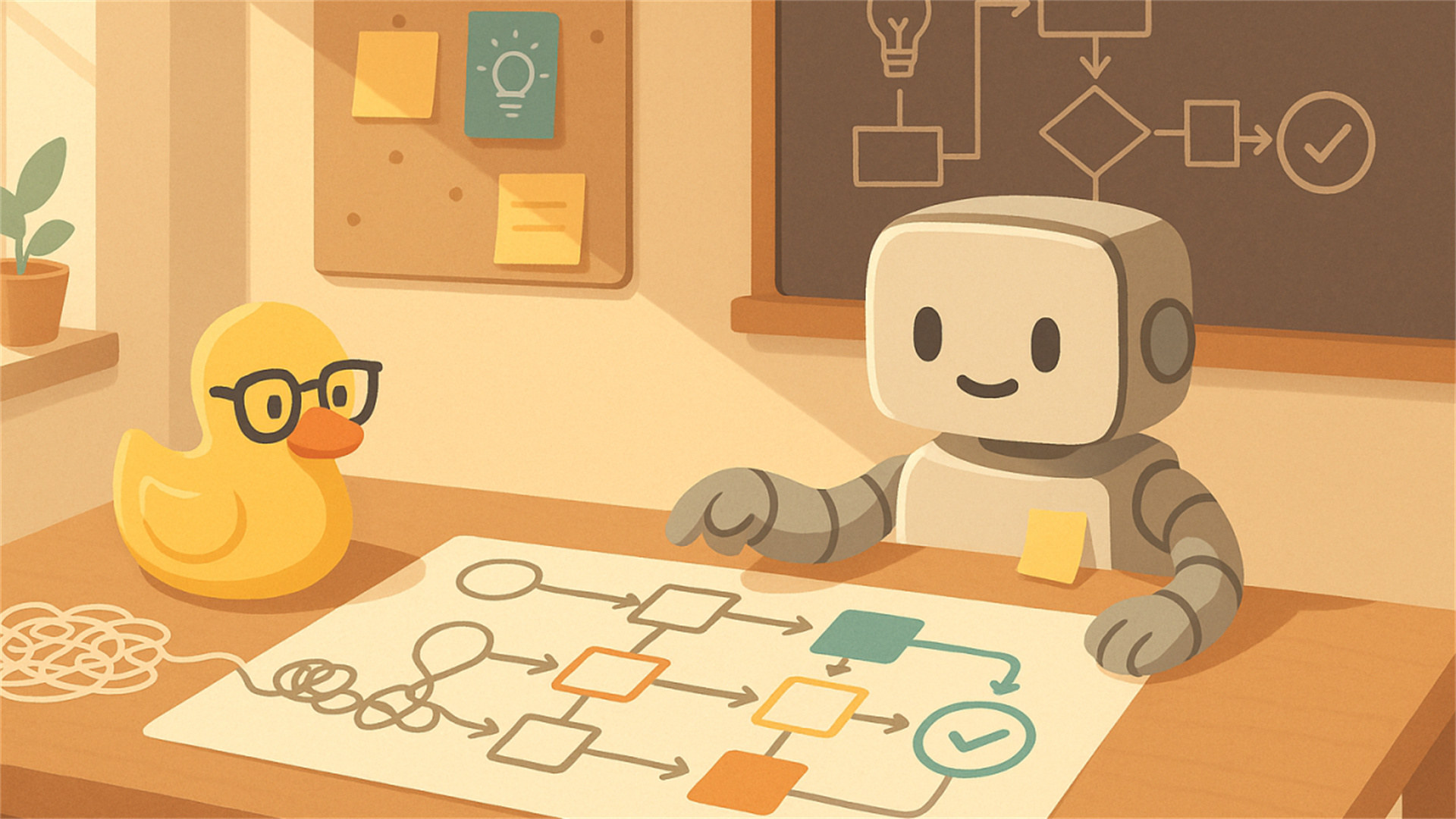
1. 🔁 The Analogy Model: Building Bridges Between Domains
The human brain is a pattern-matching machine, and analogy is its native language for learning. This model involves consciously seeking structural similarities between a familiar domain (the source) and an unfamiliar one (the target). It's not about superficial resemblance but about mapping underlying relationships.
1.1. How It Enhances Transfer:
Analogies provide a cognitive scaffold. When you encounter a new, complex problem, you can ask, "What is this like?" For instance, understanding electrical circuits is easier if you first grasp the analogy to water flowing through pipes (voltage as water pressure, current as flow rate, resistance as pipe narrowness). This model forces you to distill the core principle from the source, stripping away domain-specific details, making it portable.
1.2. Practical Application:
Deliberately practice analogical thinking. After learning a new concept in marketing (e.g., a sales funnel), ask yourself: "Where else does a 'funnel' process appear?" You might connect it to recruitment pipelines, customer support ticket prioritization, or even the digestive system. The key is to articulate the shared functional relationship—a process of narrowing down a large input to a specific output.
1.3. Avoiding the Pitfall:
Beware of false analogies that break down under scrutiny. Always validate the mapped relationships. The goal isn't to prove the analogy is perfect, but to use it as a generative tool for hypotheses and understanding, which you then test in the new context.

2. 🧱 First Principles Thinking: Deconstructing to Reconstruct
Popularized by thinkers like Aristotle and modern innovators like Elon Musk, this model is the antidote to reasoning by analogy alone. It involves breaking down complex problems or concepts into their most fundamental, undeniable truths or components—the "first principles"—and then reasoning up from there.
2.1. How It Enhances Transfer:
By stripping knowledge to its essence, you liberate it from its original context. You're left with fundamental building blocks (e.g., in physics: conservation of energy; in business: supply and demand) that are universally applicable. This allows for truly original recombination and application in areas where traditional, analogy-based industry thinking would not venture.
2.2. Practical Application:
When analyzing a successful strategy, don't just accept "it worked for Company X." Deconstruct it. What fundamental human need does it address? What core constraint did it overcome? What basic economic or behavioral principle was leveraged? These fundamental answers become the "atoms" you can reassemble to build solutions in your own field.
2.3. The Recombination Power:
The creative power lies in the reconstruction phase. With a toolkit of first principles from various disciplines, you can combine them in novel ways. For example, combining the first principle of "network effects" from sociology/tech with the first principle of "marginal cost" from economics can lead to innovative business models in seemingly unrelated sectors like education or healthcare.

3. 🌐 Systems Thinking: Seeing the Interconnected Whole
This model frames situations not as a collection of isolated parts, but as a set of interconnected elements forming a coherent whole with its own feedback loops, delays, and emergent properties. It focuses on relationships and dynamics over static snapshots.
3.1. How It Enhances Transfer:
Knowledge transfer often fails because we import a "part" without understanding the "system" it operated within. Systems thinking trains you to identify archetypal structures—like "fixes that fail," "tragedy of the commons," or "escalation"—that repeat across domains. Recognizing that you're dealing with a "shifting the burden" system structure in both a corporate dependency issue and a personal procrastination habit allows you to apply similar intervention strategies.
3.2. Mapping Mental Models:
Practice creating simple causal loop diagrams for systems you understand. What are the key variables? How do they influence each other (positive or negative feedback)? This practice builds your mental library of system archetypes, making you adept at spotting them elsewhere and anticipating the dynamic consequences of your actions.
3.3. From Linear to Circular Causality:
Moving away from linear, "A causes B" thinking is crucial. In a team, low morale (A) causes poor performance (B), but poor performance also reinforces low morale, creating a reinforcing feedback loop. Understanding this circularity, a pattern seen in ecology, economics, and psychology, is a transferable insight for designing effective interventions.
4. 🔄 Inversion Thinking: Working Backwards from the Desired End-State
Also known as thinking "backwards" or via negation, this model, championed by the ancient Stoics and mathematician Carl Jacobi, involves approaching a problem from the opposite end. Instead of asking how to achieve success, you ask, "What would guarantee failure?" Instead of asking how to improve a process, you ask, "How could we make it catastrophically worse?"
4.1. How It Enhances Transfer:
Inversion cuts through complexity and highlights critical, often non-obvious, factors. By identifying the clear paths to failure, you uncover essential conditions for success that you might have overlooked. This principle is transferable because the logic of negation is universal. A strategy to avoid project failure in software development (clear communication, defined scope) shares a structural similarity with a strategy to avoid a failed fitness goal (consistent routine, proper nutrition)—both are inversions of the failure criteria.
4.2. Uncovering Hidden Assumptions:
The process of inversion forces you to challenge assumptions. If "launching a perfect product" is your goal, the inversion ("launch a product that everyone hates") immediately highlights that you must define what "perfect" and "hate" mean for the user. This practice of assumption-spotting is a meta-skill applicable to any analytical task.
4.3. Risk Mitigation as a Transferable Skill:
The output of inversion is often a powerful risk mitigation or pre-mortem checklist. The habit of proactively identifying points of failure—whether in an investment thesis, a product launch, or a personal plan—is a supremely transferable form of knowledge. You learn to see anti-patterns across domains.

5. 🧠 Practice Habit 1: The "Second-Domain" Drill & Knowledge Gardening
Thinking models provide the lens, but habits build the muscle. The first practice habit is a two-part routine designed to force transfer out of the abstract and into action.
5.1. The "Second-Domain" Drill:
Whenever you learn a significant new concept, principle, or framework, make it a non-negotiable rule to immediately ask: "How would this apply in a completely different domain?" If you learn about "kinetic energy" in physics, don't stop there. Force yourself to write down two analogies: one in business (e.g., momentum of a marketing campaign) and one in a social context (e.g., momentum of public opinion). The quality is less important than the rigorous attempt. This closes the gap between "knowing" and "transferring."
5.2. Knowledge Gardening with a "Commonplace Book":
Maintain a digital or physical "commonplace book" not organized by source, but by core principle or mental model. When you read about "Pareto's Principle (80/20 Rule)" in a time-management book, log it under that principle. Later, when you encounter it in software bug reports or sales data, add those examples to the same entry. Over time, this creates a densely connected web of knowledge, where each principle has multiple, cross-domain instantiations, making transfer your default mode of thinking.
5.3. The Role of Spaced Retrieval:
Regularly review your commonplace book or your "second-domain" examples. Spaced retrieval strengthens the neural pathways connecting the abstract principle to its various applications. Use tools like digital flashcards with a prompt on one side ("Explain 'Feedback Loops' using one example from biology and one from management") to actively practice recall and connection.
6.⚙️Practice Habit 2: Deliberate Project-Based Application & The Feynman Technique
The second habit moves from drills to real-world projects and deep explanation, cementing knowledge in a usable form.
6.1. Initiating "Transfer Projects":
Periodically, initiate a small, low-stakes project with the explicit goal of applying a model or principle from an unfamiliar field. For example: "Use the scientific method (from science) to optimize my weekly meal prep" or "Apply game design mechanics (from video games) to make my team's monthly reporting more engaging." The constraint is the catalyst for creative transfer. Document the process and the results.
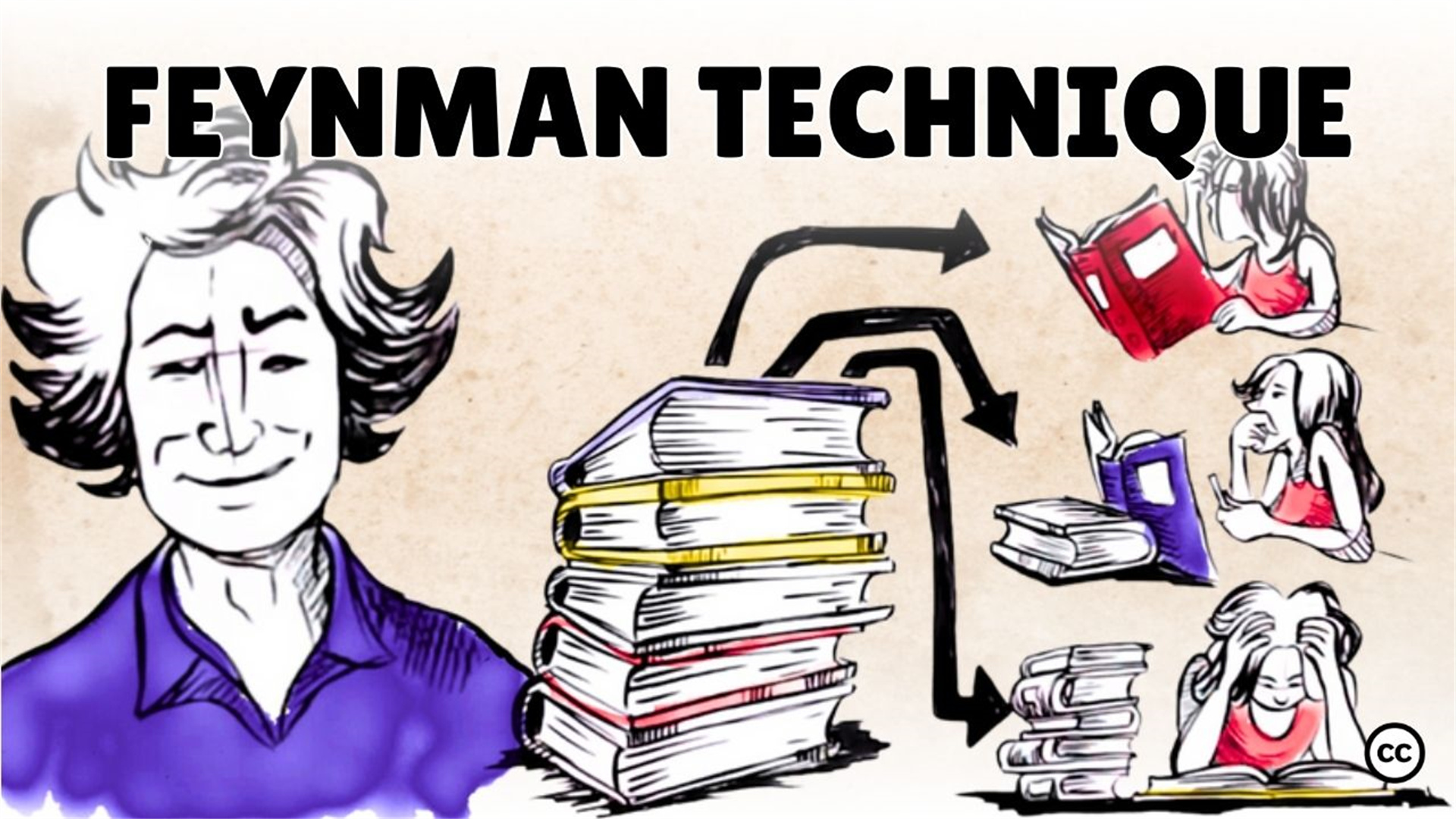
6.2. Teaching as the Ultimate Test: The Feynman Technique
Named after the physicist Richard Feynman, this technique is a powerful tool for transfer. To truly grasp a concept, try to explain it simply, as if to a novice or a child. If you can't, or if you have to resort to jargon, you've identified a gap in your understanding. This process of simplification and re-contextualization is the essence of transfer. By forcing yourself to use analogies, simple language, and new examples, you are actively repackaging the knowledge for a new "context"—the mind of the learner. Do this regularly with concepts you believe you know.
6.3. Building a "Personal Case Library":
Document your transfer projects and successful Feynman explanations as mini case studies. What was the source concept? What was the target problem? What mapping did you use? What worked and what didn't? This reflective practice turns experience into refined, transferable wisdom. Over time, you build a personal library of proven transfer applications, boosting your confidence and providing templates for future challenges.
7. 🚀 Conclusion: Cultivating a Fluid Mind
Enhancing your knowledge transfer ability is not about becoming a walking encyclopedia; it's about cultivating a fluid mind—one that can readily break knowledge free from its original moorings and navigate it to new shores of utility. The four thinking models—Analogy, First Principles, Systems, and Inversion—provide the essential maps and navigation tools for this journey. They teach you to see deeper patterns, fundamental truths, interconnected dynamics, and hidden risks.
However, maps alone don't make a master navigator. The two practice habits—the "Second-Domain" Drill paired with Knowledge Gardening and Deliberate Project-Based Application paired with the Feynman Technique—are the daily exercises that build the requisite mental muscle. They transform passive consumption of information into active, creative reconstruction.
Commit to integrating these models and habits into your learning routine. Start small: pick one model to focus on this week and perform one "second-domain" drill each day. The compound effect over time is profound. You will begin to see connections where others see silos, generate innovative solutions from unlikely inspirations, and ultimately master the art of learning how to learn—and apply—anything. Your knowledge will cease to be static information and become a dynamic, cross-contextual toolkit, empowering you to tackle the unique and complex challenges of our time.
You May Have Missed
The "Dual Encoding" Memory Method, Popular in Academia, and Its Four Applications in Daily Learning
In the relentless pursuit of academic excellence and efficient knowledge retention, learners and researchers are constantly seeking powerful cognitive tools. One method that has gained significant traction within academic circles is the Dual Encoding Theory (DET), a cognitive theory proposed by psychologist Allan Paivio. At its core, Dual Encoding posits that information presented both visually and verbally is recalled more easily and accurately than information presented in only one format. This is because our brains possess two partially independent yet interconnected systems for processing information: one for verbal language (words, sentences) and one for non-verbal imagery (pictures, sounds, sensations). When we encode information using both "channels"—for instance, by linking a concept to a mental image or a diagram—we create two distinct memory traces. These traces reinforce each other, providing multiple pathways for retrieval and making the memory more robust and resistant to forgetting.

Understanding Three Unique Challenges and Psychological Needs Faced by "Highly Intelligent Individuals"
The term "highly intelligent" often conjures images of effortless success and boundless potential. However, behind the high IQ scores and cognitive prowess lies a complex inner world marked by distinct psychological struggles. Intelligence is not merely a cognitive attribute; it is a lens through which individuals perceive and interact with the world, often leading to profound mismatches with conventional environments and social expectations. This article delves beyond the stereotype to explore three core, interlinked challenges uniquely faced by many highly intelligent people. By understanding these struggles—the tyranny of asynchronous development, the pain of intellectual loneliness, and the burden of existential intensity—we can better comprehend their accompanying psychological needs and foster more supportive pathways for their well-being and contribution.
Does IQ Always Decline with Age?
The question of whether intelligence quotient (IQ) invariably declines with age is a topic of enduring interest and misconception in psychology and public discourse. Many people assume that cognitive peak occurs in early adulthood, followed by a steady downhill trajectory. However, contemporary research paints a more nuanced picture, suggesting that the relationship between age and IQ is complex and multifaceted. This article delves into the science behind IQ and aging, examining the different components of intelligence, key research findings, and the various factors that influence cognitive change across the lifespan. By synthesizing evidence from longitudinal studies and expert analyses, we aim to provide a clear answer to the titular question and dispel common myths.
We focus on sharing high-quality original content covering diverse fields such as technology & digital, life essays, and practical useful tips. We polish every article with care to bring you a warm and in-depth reading experience. Explore more interesting new knowledge only at FunLab666.
- Operator: STARFISH ENTERTAINMENT CO., LIMITED
- Address: FLAT/RM F428 4/F 36 TAI YAU STREET WAH HING INDUSTRIAL MANSIONS SAN PO KONG HONGKONG
- Contact: [email protected]