
5 Scientific Learning Techniques to Improve Concentration and Absorption Rate in Online Classes
In the era of digital education, maintaining focus and ensuring deep comprehension during online classes presents a unique set of challenges. The home environment is filled with distractions, the passive nature of video lectures can lead to mind-wandering, and the lack of physical classroom structure often diminishes accountability. This frequently results in fragmented attention and poor knowledge retention. However, cognitive science and educational psychology offer powerful, evidence-based strategies to combat these issues. By moving beyond sheer willpower and adopting specific, research-backed techniques, learners can transform their online learning experience. This article outlines five potent scientific methods designed to enhance your concentration during virtual sessions and dramatically increase your rate of information absorption, turning passive watching into active, effective learning.

1. 🧠 Employ Active Recall & The Testing Effect
Passively re-reading notes or passively listening to a lecture is a notoriously ineffective way to learn. The science of active recall and the testing effect (also known as retrieval practice) provides a powerful alternative. This technique states that the very act of retrieving information from memory strengthens the neural pathways associated with that knowledge, making future recall easier and more durable. It's not just a tool for assessment; it's a primary learning event.
How to Apply It in Online Classes:
1. The Pause-and-Recall Method: During a lecture, periodically pause the video (every 10-15 minutes). Without looking at your notes, actively try to write down or verbally summarize the key concepts, definitions, or arguments just presented. Ask yourself: "What were the three main points of this segment?"
2. Create Self-Generated Questions: Before or after a class, turn lecture headings and subheadings into questions. For example, if a module is titled "Causes of the French Revolution," write "What were the primary social, economic, and political causes of the French Revolution?" Actively answer these questions from memory after the lecture.
3. Use Flashcard Apps Strategically: Leverage spaced repetition software (SRS) like Anki or Quizlet. Don't just use pre-made decks; the act of creating your own flashcards is a form of active processing. Use them for key terms, formulas, and concepts immediately after class for an initial review.
Scientific Basis: Studies consistently show that retrieval practice leads to superior long-term retention compared to passive review techniques like re-studying. It forces your brain to do the "heavy lifting," identifying gaps in understanding and solidifying correct information.
2.⏳Implement Spaced Repetition Systems (SRS)
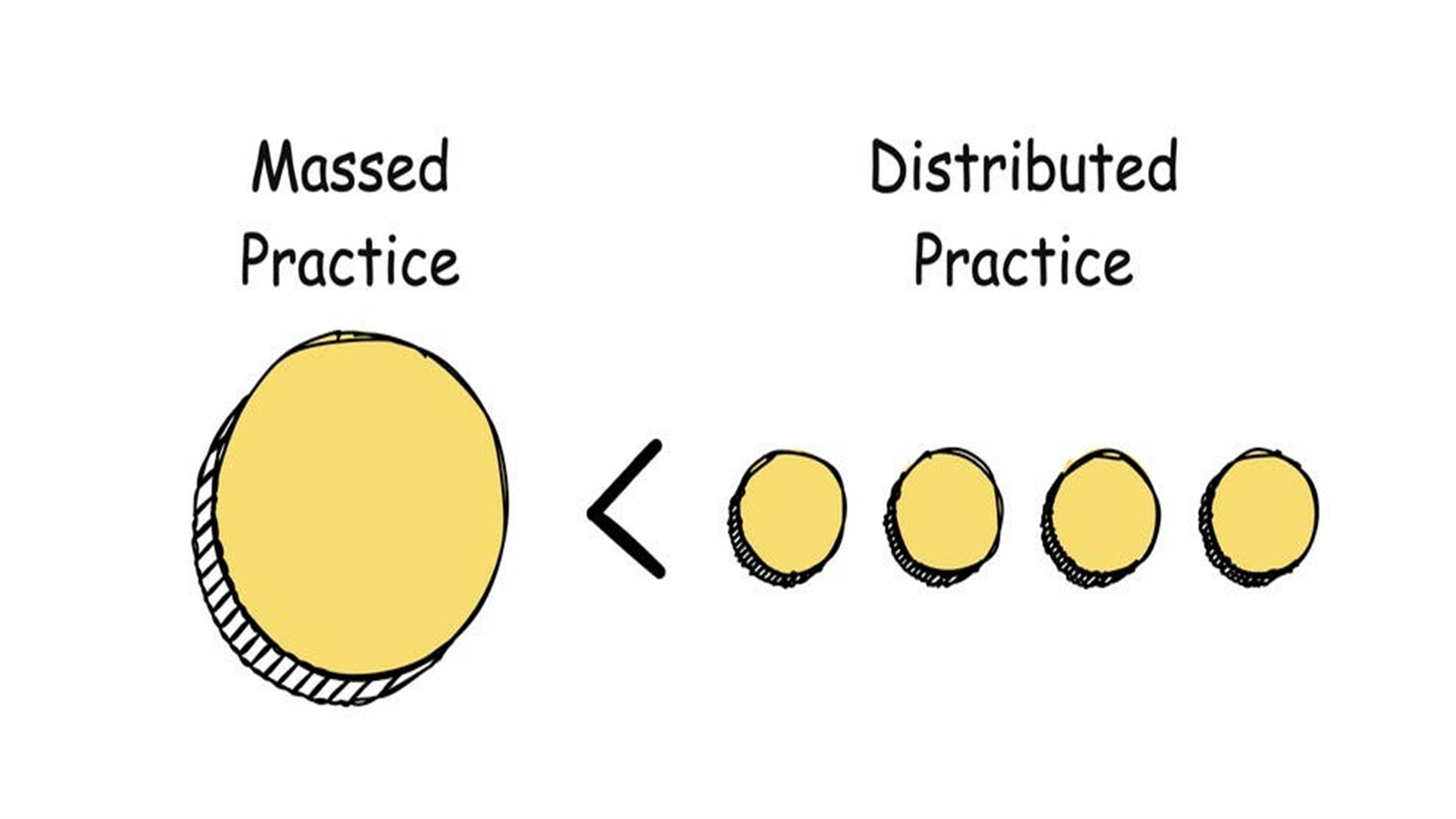
Cramming might help you pass a test tomorrow, but it ensures you'll forget almost everything next week. The spacing effect is a fundamental psychological principle: we learn more effectively when our study sessions are distributed over time rather than massed into a single "cram" session. Spaced Repetition Systems (SRS) are algorithmic tools that operationalize this principle, scheduling reviews of information at optimally increasing intervals just as you are about to forget it.
How to Apply It in Online Classes:
1. Schedule Systematic Reviews: Don't let a lecture be a one-time event. Schedule brief, focused review sessions: first review within 24 hours of the class, then again after 2-3 days, a week later, and then at increasingly longer intervals.
2. Integrate with Active Recall: Combine SRS with the active recall technique. Your flashcard app (like Anki) uses an SRS algorithm. When a card appears, you actively recall the answer before flipping it. The app then schedules the next review based on how difficult you found it.
3. Plan Your Study Calendar: Actively block time in your weekly schedule for reviewing material from previous online sessions. Treat these review blocks as non-negotiable, just like the live class itself.
Scientific Basis: The spacing effect exploits the brain's memory consolidation processes. Each time you successfully retrieve information after a delay, you signal its importance, strengthening its storage in long-term memory and making retrieval pathways more efficient. This is far more effective for long-term mastery than last-minute massed practice.

3.✍️Utilize The Feynman Technique & Elaborative Interrogation
True understanding is demonstrated not by recognition, but by explanation. The Feynman Technique (named after physicist Richard Feynman) and Elaborative Interrogation are methods that force you to deconstruct complex ideas and rebuild them in simple terms, revealing gaps in your own knowledge.
How to Apply It in Online Classes:
1. Teach It Back (Feynman Technique): After learning a concept, pretend to teach it to a complete novice or a child. Use simple language, avoid jargon, and create analogies. The moment you struggle to explain something simply, you've identified a weak spot in your understanding. Return to the lecture material to clarify that point.
2. Ask "Why?" and "How?" (Elaborative Interrogation): While taking notes, don't just record facts. Constantly ask and answer deep "why" and "how" questions. Instead of noting "The Treaty of Versailles was harsh on Germany," ask and answer: "Why were the Allies so harsh? How did specific clauses, like reparations, directly impact the German economy and political landscape?" This connects new facts to a causal framework.
3. Create Concept Maps or Diagrams: Visually map out how ideas from your online lecture connect to each other and to prior knowledge. This process of creating relationships is a form of elaboration that deepens comprehension.
Scientific Basis: These techniques leverage elaborative encoding. By connecting new information to existing knowledge networks and explaining it in your own words, you create multiple, robust pathways to access that information, significantly improving understanding and recall.

4. 🎧 Optimize Your Environment for Deep Work
Concentration is not just a mental skill; it's a product of your environment and habits. Deep Work (a concept popularized by Cal Newport) describes the state of focused, distraction-free concentration on a cognitively demanding task. Online classes require deep work, but the digital medium itself is a source of distraction.
How to Apply It in Online Classes:
1. Engineer a Dedicated, Minimalist Workspace: Create a physical space used only for study. Remove visual clutter, non-essential gadgets, and any item unrelated to the task at hand. This conditions your brain to enter "focus mode" when in that space.
2. Perform a Digital Tidy-Up: Before class, close ALL unrelated browser tabs and applications. Use website blockers (like Cold Turkey or Freedom) to prevent access to social media, news, and other distracting sites during your class time. Put your phone in another room or in "Do Not Disturb" mode.
3. Control Your Sensory Input: Use noise-canceling headphones to block ambient noise. Some learners benefit from focused soundscapes (like brown noise or instrumental music) to mask distracting sounds. Ensure your lighting is adequate to reduce eye strain.
4. Implement the Pomodoro Technique: Break your online learning into 25-minute blocks of intense focus (a "Pomodoro"), followed by a strict 5-minute break. During the Pomodoro, your attention is 100% on the lecture. This structures your focus and prevents mental fatigue.
Scientific Basis: Every context switch or distraction has a "attention residue" cost, pulling cognitive resources away from the primary task. A controlled environment minimizes these switches, allowing your prefrontal cortex to maintain focus on the complex information being presented, leading to deeper processing.

5. 🧘 Practice Mindfulness & Metacognitive Awareness
Distraction often begins internally—with wandering thoughts, anxiety about other tasks, or simple boredom. Mindfulness trains you to notice when your attention has drifted without judgment and gently bring it back. Metacognition is "thinking about your thinking," allowing you to monitor your own comprehension in real-time.
How to Apply It in Online Classes:
1. Pre-Class Mindfulness Minute: Before joining the live session or starting a recorded lecture, spend 60 seconds simply focusing on your breath. This practice centers your mind, clears residual thoughts, and prepares it to receive new information.
2. Use a "Wandering Thoughts" Pad: Keep a notepad next to you. When an intrusive, important thought arises ("I need to pay that bill"), jot it down in one or two words. This acknowledges the thought and removes the mental burden of trying to remember it, freeing your attention to return to the lecture.
3. Conduct Metacognitive Check-Ins: Periodically ask yourself monitoring questions during the lecture: "Do I truly understand this, or am I just recognizing the words?" "Can I connect this idea to what was said 10 minutes ago?" "What might be asked about this on a test?" This active monitoring prevents passive, zombie-like viewing.
4. Post-Lecture Reflection: After class, spend 5 minutes reflecting not just on *what* you learned, but *how* you learned. "When did my attention waver? What part was most challenging? Which technique helped me the most today?" This builds self-awareness for future sessions.
Scientific Basis: Mindfulness meditation has been shown to increase gray matter density in brain regions associated with attention and emotional regulation. Metacognitive strategies empower learners to become the regulators of their own learning process, identifying confusion early and deploying appropriate strategies to resolve it, leading to more efficient and self-directed learning.

🔬 Conclusion: Building a Scientific Learning Routine
Excelling in online classes requires more than just showing up to a video call; it demands a strategic approach informed by how the brain actually learns and retains information. The five scientific techniques outlined—Active Recall, Spaced Repetition, the Feynman Technique/Elaboration, Environmental Optimization for Deep Work, and Mindfulness & Metacognition—provide a comprehensive toolkit. They target different stages of the learning process: from initial encoding and storage (Active Recall, Spacing) to deep processing and understanding (Feynman, Elaboration), all within a framework that protects and directs your finite attention (Environment, Mindfulness).
The key to success is not to implement all five at once, but to start small. Perhaps begin by integrating the Pause-and-Recall method with a dedicated digital cleanup before your next lecture. Then, gradually add spaced reviews of your notes and a weekly Feynman-style explanation session. By systematically applying these evidence-based methods, you transform from a passive recipient of information into an active, engaged, and efficient learner. You will not only improve your concentration during those virtual hours but will also see a remarkable increase in your ability to absorb, retain, and apply knowledge long after the class has ended.
You May Have Missed

7 Golden Questioning Phrases in Family Education
Family education transcends mere knowledge transfer; it is a dynamic process that cultivates critical thinking, emotional intelligence, and resilient relationships. At its heart lies the art of questioning—a tool that, when wielded with intentionality, can unlock a child's potential and foster a nurturing home environment.

5 "Non-Learning" Topics for Deep Communication with Adolescents
Navigating the teenage years can feel like deciphering a complex code for many parents and guardians. While academic achievement is often the default topic of conversation, focusing solely on grades and schoolwork can create distance rather than connection. Adolescents are in a critical stage of developing their identity, values, and understanding of the world beyond the classroom.
5 Underlying Principles and 3 Practical Tools for Scientific Memory
For centuries, students, professionals, and lifelong learners have struggled with the same fundamental challenge: how to remember information effectively and efficiently. We've all experienced the frustration of studying for hours, only to draw a blank during an exam or a critical presentation.
We focus on sharing high-quality original content covering diverse fields such as technology & digital, life essays, and practical useful tips. We polish every article with care to bring you a warm and in-depth reading experience. Explore more interesting new knowledge only at FunLab666.