
Psychiatrist Shares the "5-4-3-2-1" Grounding Technique for Relieving Anxiety

In our fast-paced, modern world, anxiety has become a near-ubiquitous experience. While a certain level of anxiety is a normal and even helpful human response, chronic or overwhelming anxiety can feel paralyzing, trapping individuals in a cycle of worry about the future or distress over past events. When anxiety strikes, the mind and body can feel disconnected from the present moment, lost in a storm of "what-ifs" and catastrophic thinking. Traditional advice to "just calm down" is often futile because it doesn't provide a concrete pathway out of the spiral. This is where grounding techniques prove invaluable. Among the most widely recommended and accessible tools is the "5-4-3-2-1" grounding technique, a sensory-based method championed by mental health professionals, including psychiatrists, for its simplicity and immediate effectiveness. This technique acts as a mental anchor, leveraging your five senses to forcibly and gently redirect your attention from internal panic to external, tangible reality. It is a form of mindfulness in action, a first-aid kit for the anxious mind that requires no special equipment, only your conscious awareness. The following guide delves into the mechanics, application, and profound benefits of this powerful strategy for reclaiming a sense of calm and control.
1. 🧠 What is the 5-4-3-2-1 Grounding Technique & Why Does It Work?
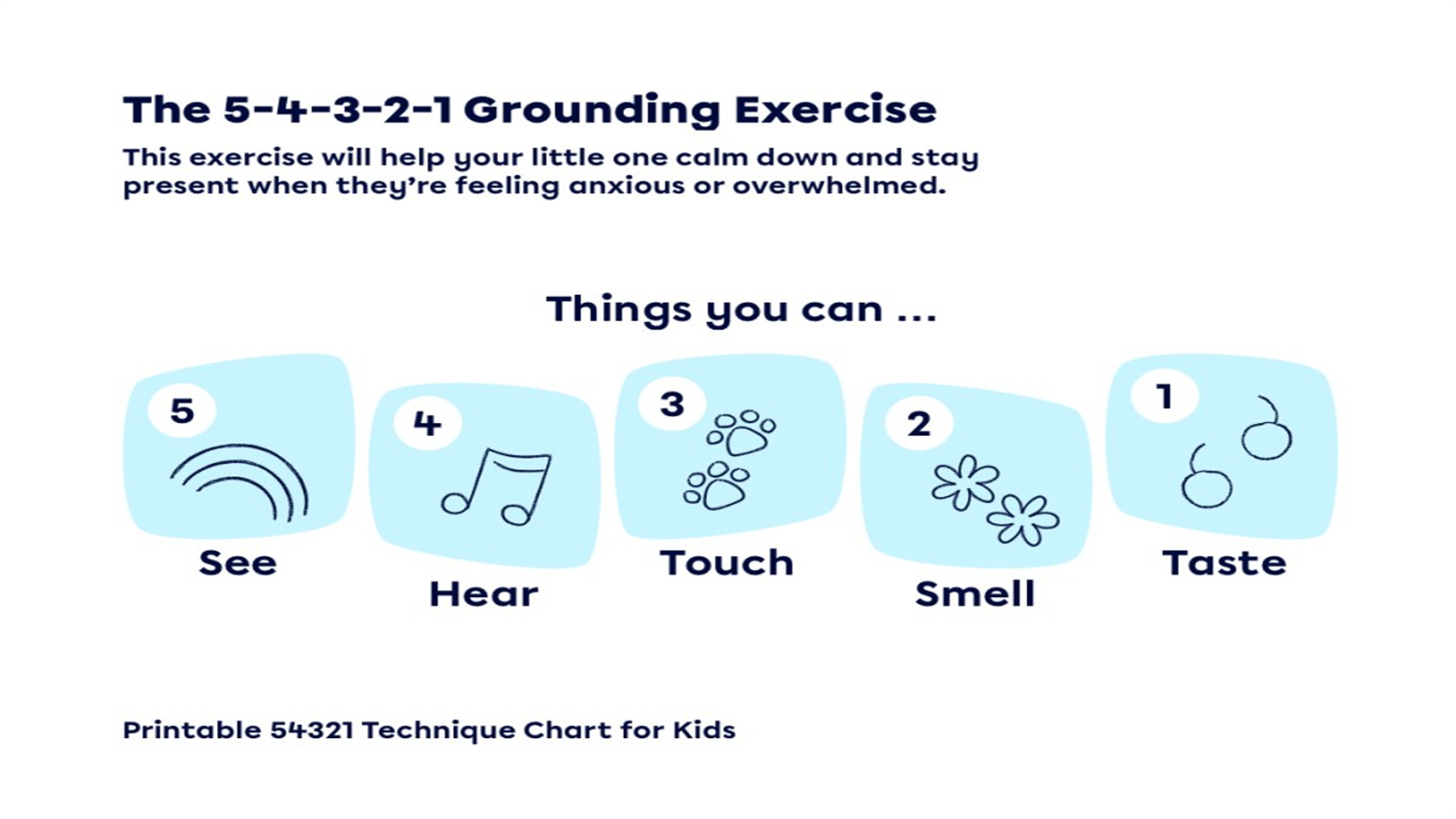
The 5-4-3-2-1 technique is a structured sensory awareness exercise designed to interrupt the physiological and cognitive feedback loops of anxiety and panic. Its core principle is based on the concept of "grounding" or "earthing"—the practice of bringing one's attention to the present moment to manage overwhelming feelings. Anxiety often pulls us into abstract, fear-based thoughts about the future or ruminations on the past. This technique works by engaging the brain's sensory processing systems, which are rooted in the "here and now."
The Science Behind the Practice
From a neurological perspective, anxiety is associated with heightened activity in the amygdala (the brain's fear center) and a cascade of stress hormones like cortisol and adrenaline. When you consciously engage your senses—sight, touch, sound, smell, taste—you activate different neural pathways, primarily involving the prefrontal cortex. This is the part of the brain responsible for executive functions like focused attention, planning, and rational thought. By deliberately directing focus to sensory details, you effectively "hijack" cognitive bandwidth away from the amygdala's alarm signals. It's a way of telling your nervous system, "Scan for real, immediate data, not for imagined threats." This shift can help down-regulate the fight-or-flight response and initiate a calming parasympathetic response.
A Bridge to Mindfulness
The technique is also a gateway to mindfulness meditation. It doesn't require you to clear your mind—a daunting task when anxious—but instead gives it a specific, manageable job. By counting down through the senses (5, then 4, then 3...), it provides a clear structure that an overwhelmed mind can latch onto, making mindfulness accessible even in moments of high distress.
2. 👁️ A Step-by-Step Guide to Practicing the 5-4-3-2-1 Method

The beauty of this technique lies in its precise, easy-to-remember framework. You can do it anywhere, anytime, whether you're at your desk, in a crowded store, or lying in bed at night. The goal is not to judge your observations but to neutrally acknowledge them. Here is the exact sequence to follow:
Step 1: Acknowledge 5 Things You Can SEE 👀
Look around slowly and deliberately. Move your gaze from item to item. Don't just glance; really notice details. It could be the grain of the wood on your desk, a slight crack in the ceiling, the specific green hue of a plant leaf, the time on a digital clock, or the pattern of sunlight on the floor. Name them silently or softly to yourself: "I see my blue notebook. I see a coffee mug with a chip. I see a shadow stretching from the chair." The objective is to visually connect with your immediate environment.
Step 2: Acknowledge 4 Things You Can FEEL✋
Direct your attention to your sense of touch. Identify four physical sensations you are experiencing in that moment. These can be textures against your skin or internal bodily sensations. Examples include: "I feel the cool, smooth surface of my phone. I feel the soft fabric of my sweater on my arms. I feel the firm pressure of the floor under my feet. I feel the gentle breeze from the air conditioner on my face." This step reinforces your physical presence in space.
Step 3: Acknowledge 3 Things You Can HEAR 👂
Close your eyes if it helps. Tune into the soundscape around you. Listen for both prominent and subtle sounds. You might hear: "I hear the hum of the refrigerator. I hear the distant sound of traffic. I hear my own breath entering and leaving my body." Don't judge the sounds as good or bad; simply acknowledge them as neutral data points.
Step 4: Acknowledge 2 Things You Can SMELL 👃
This can sometimes be the most challenging step, as ambient smells might not always be obvious. If you can't immediately detect two smells, it's okay to seek them out. Sniff the air, your sleeve, or a nearby object. Smells could be: "I smell the faint scent of laundry detergent on my clothes. I smell the stale coffee in my cup." Even noticing a neutral or "no distinct smell" is a valid observation.
Step 5: Acknowledge 1 Thing You Can TASTE 👅
Focus on your mouth. What is the current taste? It might be the lingering flavor of your last meal or drink, the mint of toothpaste, or simply the neutral taste of your mouth. You can take a sip of water or a bite of a neutral food like a cracker to have a distinct taste to acknowledge. The final step, focusing on one single sensory input, brings the exercise to a focused conclusion.
3. 🎯 When and How to Use This Technique for Maximum Effect

Understanding the optimal contexts and methods for applying the 5-4-3-2-1 technique can significantly enhance its effectiveness as a coping tool. It is versatile but particularly potent in specific scenarios.
Ideal Situations for Application
Use this technique at the very first signs of rising anxiety or a panic attack. Early intervention is key. It is perfect for moments of sudden overwhelm, such as before a public speech, during a stressful work meeting, after a disturbing nightmare, or when experiencing intrusive, looping thoughts. It can also be used proactively during times you know are generally stressful, like your morning commute, to build resilience.
Pro Tips for Enhanced Grounding
To deepen the practice, pair it with controlled breathing. Inhale slowly as you search for each item, and exhale fully as you acknowledge it. You can also add a layer of detail to each observation—instead of "I see a lamp," try "I see a brass desk lamp with a cream-colored linen shade and a small dent on its base." The more detailed, the more it engages your brain. If you have difficulty with one sense (like smell), it's perfectly acceptable to notice the same sense twice (e.g., find two more things you can feel). The structure is a guide, not a rigid rule.
Integration with Other Practices
The 5-4-3-2-1 method can be a standalone crisis tool or integrated into a broader mindfulness or therapy regimen. For instance, after completing the sequence, you might transition into a few minutes of focused breathing or a brief body scan meditation, using the calm achieved from grounding as a foundation.
4. 🌈 Beyond Immediate Relief: Long-Term Benefits & Adaptations

While the primary use of the 5-4-3-2-1 technique is for acute anxiety relief, regular practice yields significant long-term psychological benefits. It trains the brain to develop a healthier relationship with distress.
Cultivating Mindfulness as a Habit
Frequent use of this exercise strengthens your "mindfulness muscle." Over time, you may find yourself automatically noticing sensory details in everyday life, which enriches your experience and builds a natural buffer against stress. You become less habitually lost in thought and more habitually present.
Neuroplasticity and Emotional Regulation
Each time you successfully use a grounding technique to manage anxiety, you are reinforcing a new neural pathway. You are teaching your brain: "When I feel this way, I have an effective action I can take." This builds self-efficacy and emotional regulation skills, reducing the feeling of being helplessly at the mercy of your emotions.
Adaptations for Different Needs
The technique is highly adaptable. For children, you can turn it into a "scavenger hunt" game. For individuals with sensory processing differences, you can modify the order or focus on the senses that are most comforting. A "5-4-3-2-1" check-in can also be used to enhance positive moments, like noticing five beautiful things during a walk in nature to deepen gratitude and joy.
5. 🚀 Making It Your Own: Incorporating Grounding into Daily Life

The ultimate goal is to move from using the 5-4-3-2-1 technique as an emergency intervention to weaving its principles into the fabric of your daily awareness, thereby preventing anxiety from reaching peak intensity in the first place.
Create Routine "Grounding Checks"
Set gentle reminders on your phone to pause and do a quick, abbreviated version a few times a day. This isn't about waiting for crisis but about maintaining a baseline connection to the present. You might do a "3-2-1" version (3 things you see, 2 you feel, 1 you hear) during a midday break.
Pair with a Trigger or Habit
Use an existing daily habit as a trigger to practice. For example, every time you wash your hands, use that 20 seconds to notice two things you feel (the water temperature, the soap texture) and one thing you hear. This is known as "habit stacking" and makes the practice effortless.
Develop a Personal "Grounding Kit"
Identify objects that are particularly effective at engaging your senses for a more focused grounding session. This could include a smooth stone to touch, a essential oil rollerball to smell, a photograph of a peaceful place to look at, or a piece of sour candy to taste. Keep a small kit in your bag or at your desk for ready access.
🎯 Conclusion: Your Portable Anchor to the Present

The "5-4-3-2-1" grounding technique, as shared by psychiatrists and therapists worldwide, is more than a simple anxiety hack; it is a profound practice of re-orientation. It empowers you with an immediate, evidence-based strategy to disrupt the cycle of panic and return to the safety of the present moment. By systematically engaging your five senses, you commandeer your brain's attention away from abstract fear and toward concrete, non-threatening reality. This practice demystifies anxiety management, proving that you don't need complex therapy in the moment of crisis—you just need your own awareness and a simple, memorable structure. Whether used as a first-aid response during a panic attack or as a daily exercise to cultivate mindfulness, the 5-4-3-2-1 method is a versatile and powerful tool. By making it a regular part of your life, you build not only resilience against anxiety but also a deeper, richer, and more engaged experience of the world around you, one sensory detail at a time. Remember, in the storm of anxiety, the present moment is always your anchor, and this technique is your lifeline to it.
You May Have Missed

From Identifying 4 Types of Allergens to a 3-Layer Protection Strategy for "Step-by-Step" Medication
Allergies affect millions worldwide, ranging from mild irritations to life-threatening reactions. Effective management hinges on a thorough understanding of allergens and a structured approach to medication. This article explores the journey from pinpointing four common allergen types to implementing a robust three-layer protection strategy for "step-by-step" medication. By integrating identification and proactive measures, individuals can achieve better control over allergic responses, enhancing quality of life. We'll delve into practical insights, backed by global health guidelines, to empower you with knowledge for comprehensive allergy care. From seasonal sniffles to severe anaphylaxis, a systematic plan is key—let's begin with the basics of allergen identification.
Dentist Demonstrates the Bass Brushing Technique and 6 Essential Cleaning Tools
For many, the daily ritual of brushing teeth is a quick, automatic task—a few hurried swipes before rushing out the door. However, this common approach often misses the mark, leaving plaque to accumulate dangerously along the gum line and between teeth, the very areas most susceptible to decay and gum disease. Professional dental cleanings are crucial, but the foundation of lifelong oral health is built at home, through consistent and correct technique. This article, guided by dental expertise, delves deep into the cornerstone of effective home care: the modified Bass brushing technique. We will break down this dentist-recommended method step-by-step and pair it with a detailed exploration of six essential cleaning tools. Moving beyond generic advice, this guide provides a specific, actionable blueprint to transform your oral hygiene routine from a mundane task into a powerful, preventative health practice.

3 Step Frequency Goals and 2 Efficient Walking Postures
Walking is often hailed as the most accessible and fundamental form of exercise. Yet, for something so simple, there is a profound depth to mastering it for optimal health, fitness, and well-being. Moving beyond a casual stroll requires intention and strategy. This guide focuses on two pivotal, interconnected pillars: Frequency and Form. Setting clear step-frequency goals provides the structure and motivation for consistency, while adopting efficient walking postures ensures that every step you take is powerful, safe, and effective. Whether your aim is to boost cardiovascular health, manage weight, improve mental clarity, or enhance overall vitality, aligning your step goals with proper biomechanics is the key to unlocking the full transformative potential of this simple act. Let's explore how to intelligently structure your walking routine and perfect your stride.
We focus on sharing high-quality original content covering diverse fields such as technology & digital, life essays, and practical useful tips. We polish every article with care to bring you a warm and in-depth reading experience. Explore more interesting new knowledge only at FunLab666.