
Does IQ Always Decline with Age?
Introduction: Setting the Stage for the IQ-Age Debate
The question of whether intelligence quotient (IQ) invariably declines with age is a topic of enduring interest and misconception in psychology and public discourse. Many people assume that cognitive peak occurs in early adulthood, followed by a steady downhill trajectory. However, contemporary research paints a more nuanced picture, suggesting that the relationship between age and IQ is complex and multifaceted. This article delves into the science behind IQ and aging, examining the different components of intelligence, key research findings, and the various factors that influence cognitive change across the lifespan. By synthesizing evidence from longitudinal studies and expert analyses, we aim to provide a clear answer to the titular question and dispel common myths.
1. 🤔 The Prevailing Myth of Universal Decline
A widespread belief holds that intelligence inevitably diminishes as we grow older, often attributed to stereotypes about aging and cognitive slowdown. This notion is reinforced by casual observations of memory lapses or slower processing speed in older adults. However, this simplistic view overlooks the multidimensional nature of intelligence and the substantial individual variability in cognitive aging. Scientific inquiry challenges the idea of a uniform decline, revealing that while some mental abilities may wane, others can remain stable or even improve well into later life.
2. 🎯 Purpose and Scope of This Exploration
This article aims to move beyond broad generalizations to explore the specific dynamics of IQ change over time. We will dissect what IQ tests measure, distinguish between different types of intelligence, review pivotal longitudinal research, and identify lifestyle and biological factors that modulate cognitive trajectory. The goal is to offer an evidence-based perspective, empowering readers with knowledge about how intelligence evolves and how to potentially nurture cognitive health throughout life.
Understanding IQ: Deconstructing the Intelligence Quotient

Before assessing age-related changes, it is crucial to understand what "IQ" represents. Intelligence Quotient is a score derived from standardized tests designed to measure human intelligence. Historically, IQ was conceptualized as a single, general factor (g-factor), but modern psychology recognizes intelligence as a composite of multiple abilities. This section breaks down the core components and theories essential for grasping the age-IQ relationship.
1. 🧠 What Exactly is IQ? A Historical and Modern View
IQ, or Intelligence Quotient, originated from early 20th-century efforts to quantify mental ability. Alfred Binet developed the first practical intelligence test to identify children needing educational assistance. Today, IQ tests like the Wechsler Adult Intelligence Scale (WAIS) provide scores that compare an individual's performance to a normative age group, with an average score set at 100. These tests assess a range of cognitive domains, including verbal comprehension, perceptual reasoning, working memory, and processing speed. It is vital to note that IQ is a measure of certain cognitive capacities under test conditions, not an exhaustive capture of a person's wisdom, creativity, or practical problem-solving in daily life.
2. 📈 The Critical Dichotomy: Fluid vs. Crystallized Intelligence
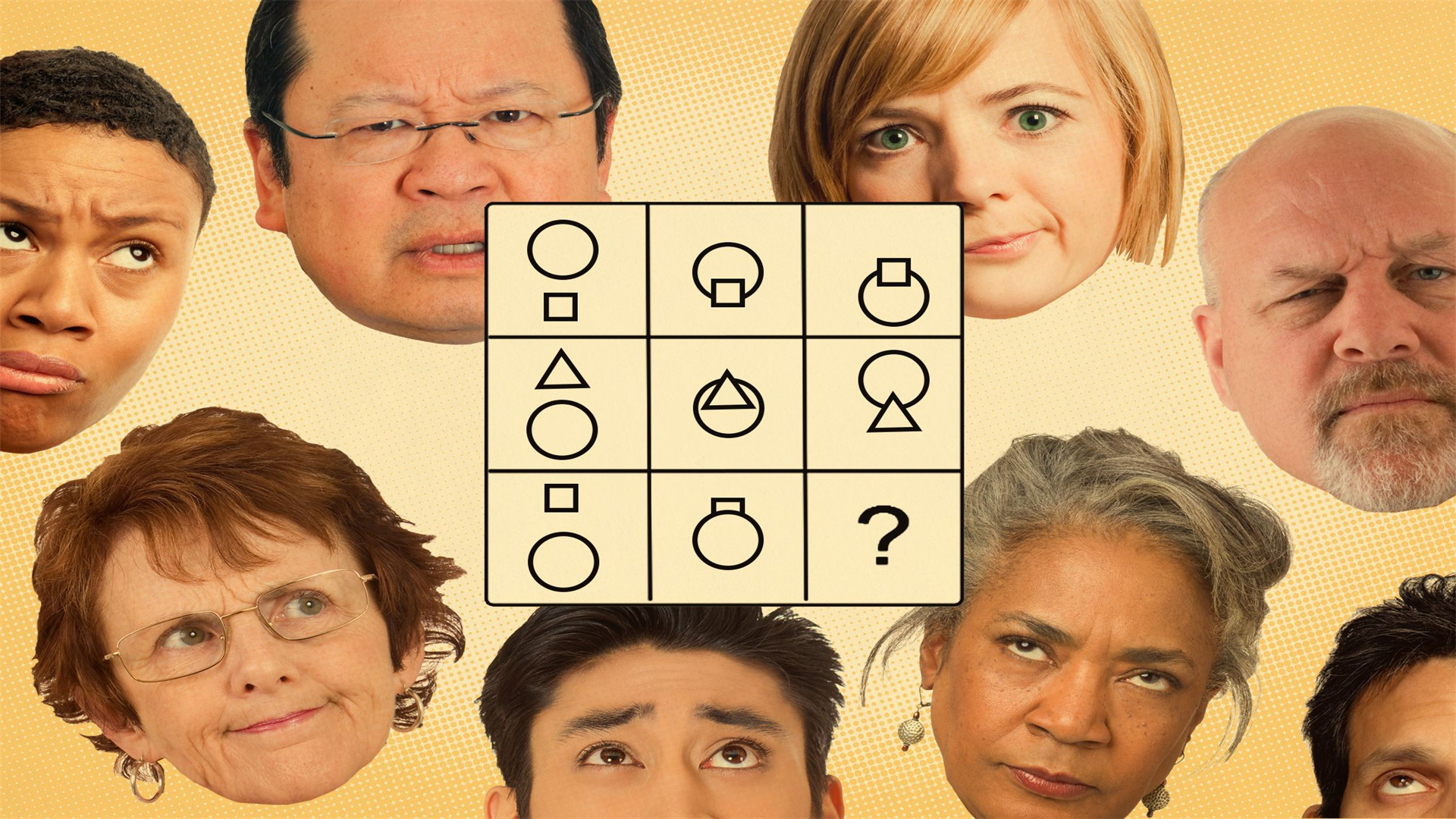
Psychologist Raymond Cattell's theory distinguishes two primary types of intelligence, which are fundamental to understanding aging effects. Fluid intelligence (Gf) refers to the ability to solve novel problems, use logic in new situations, and identify patterns without relying on prior knowledge. It involves reasoning, abstract thinking, and mental agility. Tasks measuring fluid intelligence include matrix reasoning puzzles or identifying the next shape in a sequence. In contrast, crystallized intelligence (Gc) encompasses acquired knowledge, skills, and experience accumulated over a lifetime. It relies on long-term memory and includes vocabulary, general knowledge, and procedural expertise. This distinction is pivotal because these two intelligences exhibit different developmental trajectories across the lifespan.
3. 🌟 Beyond Gf and Gc: Other Models of Cognitive Ability
While the fluid-crystallized model is highly influential, other frameworks offer additional insights. John Horn expanded on Cattell's work, identifying more broad abilities like processing speed and short-term memory. Carroll's Three-Stratum Theory organizes cognitive abilities hierarchically, with a general factor at the top, broad abilities in the middle (like fluid and crystallized intelligence), and narrow specific abilities at the bottom. Howard Gardner's theory of multiple intelligences proposes independent modalities such as linguistic, logical-mathematical, spatial, musical, bodily-kinesthetic, interpersonal, intrapersonal, and naturalist intelligences. Although not all are measured by standard IQ tests, these models remind us that intelligence is multifaceted, and age may affect these domains differently.
The Age-IQ Relationship: Evidence from Scientific Research
Longitudinal and cross-sectional studies provide the empirical backbone for understanding how IQ changes with age. These investigations track the same individuals over many years or compare different age groups at a single point in time. The consensus from decades of research is that intelligence does not follow a single, uniform path of decline. Instead, patterns vary significantly depending on the type of cognitive ability measured.
1. 📉 The Trajectory of Fluid Intelligence
Research consistently indicates that fluid intelligence tends to peak in early adulthood, often in the 20s or 30s, and gradually declines thereafter. This decline is linked to age-related changes in brain physiology, such as reduced processing speed, working memory capacity, and executive function. Neurobiological factors include synaptic pruning, changes in neurotransmitter systems, and potential shrinkage in certain brain regions like the prefrontal cortex. Studies like the Seattle Longitudinal Study have shown that abilities such as inductive reasoning and spatial orientation show noticeable age-related decreases. However, the rate and onset of decline can vary widely among individuals, and significant declines are often not evident until later in life (e.g., after 60 or 70).
2. 📈 The Trajectory of Crystallized Intelligence
In stark contrast to fluid intelligence, crystallized intelligence generally remains stable or even increases throughout much of adulthood, often plateauing in late middle age and showing only mild decline in very old age. As individuals accumulate knowledge, vocabulary, and expertise, their crystallized intelligence can grow. Older adults often outperform younger counterparts in tasks requiring verbal knowledge, semantic memory, and professional or life experience. This growth is supported by the brain's continued capacity for learning and neuroplasticity. Research confirms that skills and knowledge embedded in long-term memory are resilient to aging, barring neurodegenerative diseases.
3. 🔬 Key Longitudinal Studies and Their Findings
The Seattle Longitudinal Study, initiated by K. Warner Schaie in 1956, is one of the most comprehensive investigations of cognitive change. Tracking over 6,000 participants for decades, it found that while some abilities decline, others hold steady, and the timing and magnitude of change differ across individuals. It highlighted that cohort effects (differences between generations due to education, culture) are significant. Another major study, the Lothian Birth Cohort studies in Scotland, has followed individuals born in 1921 and 1936, finding that childhood IQ predicts later-life cognitive ability, but lifestyle factors substantially influence the aging trajectory. These studies underscore that "decline" is not inevitable or uniform; many people maintain high levels of function in various domains well into old age.
Factors That Influence IQ Change Over the Lifespan

IQ trajectory is not solely determined by chronological age; it is modulated by a constellation of genetic, health, environmental, and lifestyle factors. Understanding these moderators explains why some individuals experience significant cognitive decline while others retain sharp minds into their later years.
1. 🏥 Physical Health and Lifestyle Choices
Cardiovascular health is closely linked to cognitive health. Conditions like hypertension, diabetes, and obesity can impair blood flow to the brain, accelerating decline. Conversely, regular physical exercise, particularly aerobic activity, promotes neurogenesis, improves cerebral blood flow, and is associated with better cognitive maintenance. Nutrition plays a role; diets rich in antioxidants, omega-3 fatty acids (e.g., Mediterranean diet) may protect brain structure. Adequate sleep is crucial for memory consolidation and cognitive repair. Avoiding smoking and excessive alcohol consumption also preserves cognitive function. Essentially, a healthy body supports a healthy mind across the lifespan.
2. 🎓 Education, Occupational Complexity, and Cognitive Engagement
The "use it or lose it" hypothesis suggests that mentally stimulating activities build cognitive reserve—a resilience against age-related brain changes. Higher levels of formal education are consistently linked to higher baseline IQ and slower decline. Engaging in complex work, lifelong learning, reading, puzzles, learning new skills, and social interactions keeps neural networks active and adaptable. This cognitive engagement helps compensate for declines in fluid abilities by leveraging crystallized knowledge and efficient cognitive strategies.
3. 🧬 Genetic Predispositions and Environmental Influences
Genetics account for a substantial portion of intelligence stability, but they interact with environment. Certain genes may influence susceptibility to age-related cognitive decline or neurodegenerative diseases like Alzheimer's. However, environmental enrichment—such as stimulating childhood environments, access to quality education, and socio-economic status—can amplify or mitigate genetic effects. Psychosocial factors like chronic stress, depression, and lack of social support can negatively impact cognitive function, while positive social relationships and a sense of purpose are protective.
Conclusion: Synthesizing the Answer

The evidence clearly demonstrates that IQ does not always decline with age. The answer to the titular question is a definitive "no." While fluid intelligence aspects like processing speed and abstract problem-solving often decrease after early adulthood, crystallized intelligence—encompassing knowledge and experience—typically holds steady or improves. The overall cognitive profile shifts rather than uniformly diminishes. Individual differences are profound, shaped by genetics, health, lifestyle, and engagement. Therefore, portraying aging as an inevitable cognitive downhill slide is inaccurate and overly pessimistic.
1.✅Summarizing the Key Takeaways
Intelligence is multidimensional, primarily divided into fluid and crystallized types, which age differently. Fluid intelligence often declines, while crystallized intelligence is maintained or grows. Longitudinal studies show significant variability; many older adults outperform younger ones in knowledge-based tasks. Factors like physical health, mental stimulation, education, and social engagement play critical roles in modulating cognitive aging.
2. 💡 Practical Implications for Cognitive Health
To foster cognitive vitality across the lifespan, individuals can adopt proactive strategies. These include maintaining cardiovascular fitness through exercise, eating a brain-healthy diet, engaging in continuous learning and mentally challenging activities, cultivating strong social connections, managing stress, and getting regular health check-ups. Society can support this by promoting lifelong education, creating age-friendly environments, and combating ageist stereotypes.
3. 🔮 Future Directions in Research and Understanding
Future research will likely focus on personalized approaches to cognitive aging, leveraging neuroscience and genetics to identify individual risk profiles. Interventions such as cognitive training, brain stimulation, and pharmacological agents are being explored to slow decline or enhance function. As populations age globally, understanding how to extend cognitive healthspan—the period of life spent with good mental function—becomes increasingly important. The journey of intelligence across age is not a simple story of loss but a complex narrative of adaptation, growth, and resilience.
You May Have Missed
Identifying and Avoiding Five Common "Cognitive Biases" to Improve Decision-Making Intelligence
In our daily lives, from simple choices like what to have for lunch to complex professional and financial decisions, we are constantly making judgments. We like to believe these judgments are rational, logical, and objective. However, decades of research in psychology and behavioral economics reveal a different story: our minds are often hijacked by systematic patterns of deviation from norm or rationality in judgment, known as cognitive biases. These mental shortcuts, or heuristics, evolved to help us make quick decisions but frequently lead to predictable errors. By understanding and identifying these biases, we can significantly improve our decision-making intelligence, leading to better outcomes in business, relationships, and personal growth. This article will explore five pervasive cognitive biases, illustrate their impact with examples, and provide practical strategies to mitigate their influence.

Eight Observation Windows and Development Focuses for Children Aged 0-6 in Intellectual Development
The first six years of a child's life represent a period of staggering neurological growth and intellectual formation. Often termed the "foundational years," this period sees the brain developing at its most rapid pace, building the essential neural architecture that will support all future learning, behavior, and health. Intellectual development in early childhood is not a singular track but a complex, interconnected web of cognitive, linguistic, motor, social, and emotional growth. For parents, caregivers, and educators, understanding this multifaceted journey is key to providing effective support. This article outlines eight crucial "observation windows"—key areas of development—to monitor and nurture in children from birth to age six. By focusing on these core domains with intentionality and warmth, we can help unlock each child's unique potential and set a strong, joyful foundation for lifelong intellectual curiosity and resilience.

Understanding Three Unique Challenges and Psychological Needs Faced by "Highly Intelligent Individuals"
The term "highly intelligent" often conjures images of effortless success and boundless potential. However, behind the high IQ scores and cognitive prowess lies a complex inner world marked by distinct psychological struggles. Intelligence is not merely a cognitive attribute; it is a lens through which individuals perceive and interact with the world, often leading to profound mismatches with conventional environments and social expectations. This article delves beyond the stereotype to explore three core, interlinked challenges uniquely faced by many highly intelligent people. By understanding these struggles—the tyranny of asynchronous development, the pain of intellectual loneliness, and the burden of existential intensity—we can better comprehend their accompanying psychological needs and foster more supportive pathways for their well-being and contribution.
We focus on sharing high-quality original content covering diverse fields such as technology & digital, life essays, and practical useful tips. We polish every article with care to bring you a warm and in-depth reading experience. Explore more interesting new knowledge only at FunLab666.