
5 Core Stages and 20 Daily Games for Early Math Education at Home
In the journey of early childhood development, mathematical thinking is far more than just learning numbers. It's about understanding patterns, solving problems, and making sense of the world. For parents and caregivers, fostering a love for math at home doesn't require fancy tools or a degree in education. It's about integrating playful, intentional, and developmentally appropriate activities into daily life. This guide breaks down early math learning into five foundational stages, providing a roadmap for your child's mathematical journey. For each stage, we offer four simple, engaging games that use common household items. By moving through these stages—from sensory exploration to early problem-solving—you can build a strong, positive, and holistic mathematical foundation, turning everyday moments into powerful learning opportunities.
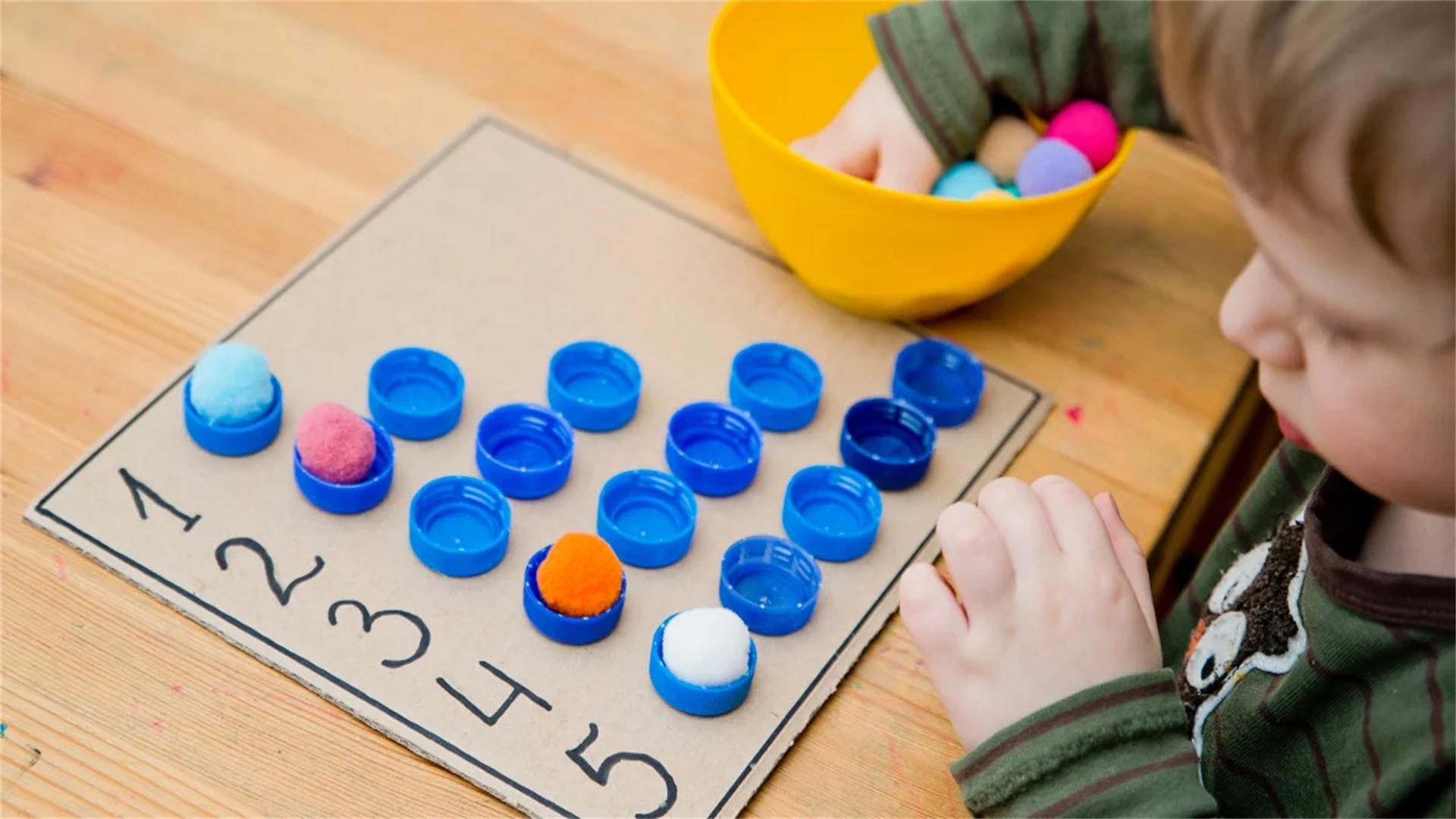
Stage 1: Sensory Exploration & Mathematical Awareness 👐
Before children understand symbols like "1, 2, 3," they learn through their senses. This stage focuses on building pre-numeracy skills through touch, sight, and movement. It's all about experiencing quantity, size, and order in a tangible way.
1. 🧺 The Sorting Basket Bonanza
Gather a basket of mixed household objects: different colored socks, spoons and forks, large and small blocks, or various types of pasta. Encourage your child to sort them. Do they sort by color? By type? By size? There's no wrong answer. This activity builds the critical skill of classification, which is the foundation for understanding sets and categories in math.
2. 🥣 Sensory Bin Measurements
Create a sensory bin filled with rice, beans, or water. Provide cups, spoons, funnels, and containers of different sizes. Let your child pour, fill, and empty. Use language like "full," "empty," "more," "less," "heavy," and "light." This playful exploration introduces basic concepts of volume, capacity, and comparison in the most hands-on way possible.
3. 📏 Nature Size Hunt
On a walk or in your backyard, go on a hunt for the "biggest" leaf, the "smallest" rock, or the "longest" stick. Compare objects directly, holding them side-by-side. This game builds vocabulary and an intuitive understanding of relative size and measurement, key components of early geometry.
4. 🎵 Action Patterns
Create simple movement patterns for your child to copy and continue. For example, "Clap, Stomp, Jump!" or "Touch your head, touch your toes." Start with two-step patterns (A-B) and move to three-step (A-B-C). This links math to physical activity, teaching the core concept of a repeating sequence, which is fundamental to algebraic thinking.
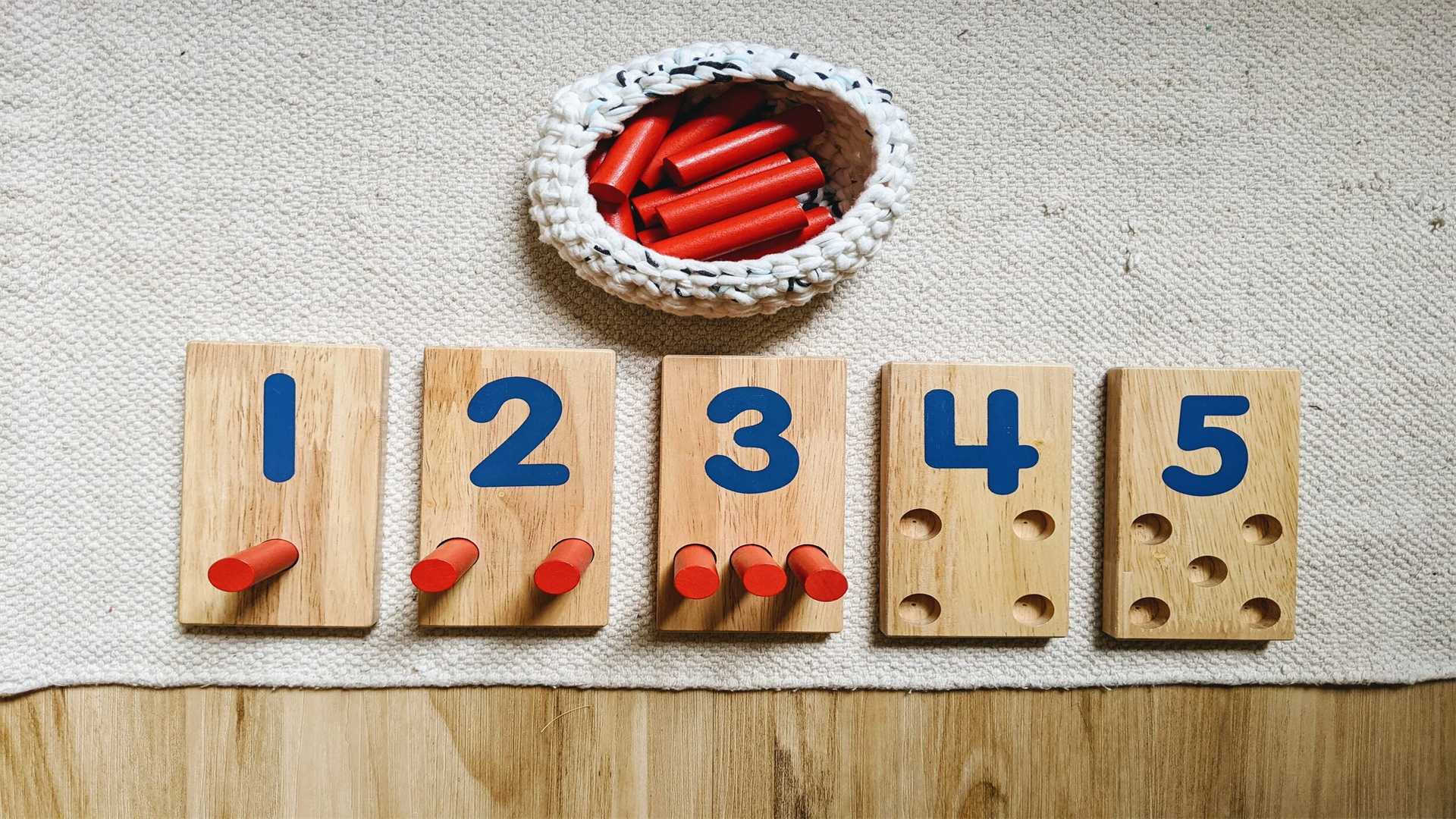
Stage 2: Numbers, Counting & One-to-One Correspondence 🔢
This stage bridges the sensory world with the symbolic world of numbers. The key goal here is moving beyond rote counting (reciting numbers) to understanding that numbers represent quantities. This is where the magic of "how many" truly clicks.
1. 🧱 Count & Build Tower
Using blocks or Duplo, roll a die. Help your child identify the number of dots, then have them count out that many blocks to build a tower. This directly connects the symbolic representation (dots on the die) with the action of counting objects and creating a corresponding structure, reinforcing one-to-one correspondence.
3. 👕 Laundry Number Match
Write numbers 1-5 or 1-10 on clothespins. On a piece of string or a pants hanger, attach corresponding numbers of socks or washcloths. Your child's job is to clip the clothespin with the correct number onto the group of items. This turns a chore into a game that solidifies number-quantity association.
3. 🛒 Grocery Store Count-Up
While shopping, ask your child to be your helper. "Can you get 3 apples and put them in the bag?" or "Let's count how many yogurt containers we have." This real-world application gives counting a purpose and context, making the skill meaningful and practical.
4. 🎨 Dot-to-Dot Discovery
Use or create simple dot-to-dot pictures with numbers 1-10 or 1-20. As your child connects the dots in numerical order, they are practicing number sequencing and will be rewarded by revealing a picture. This combines number recognition, order, and fine motor skills.
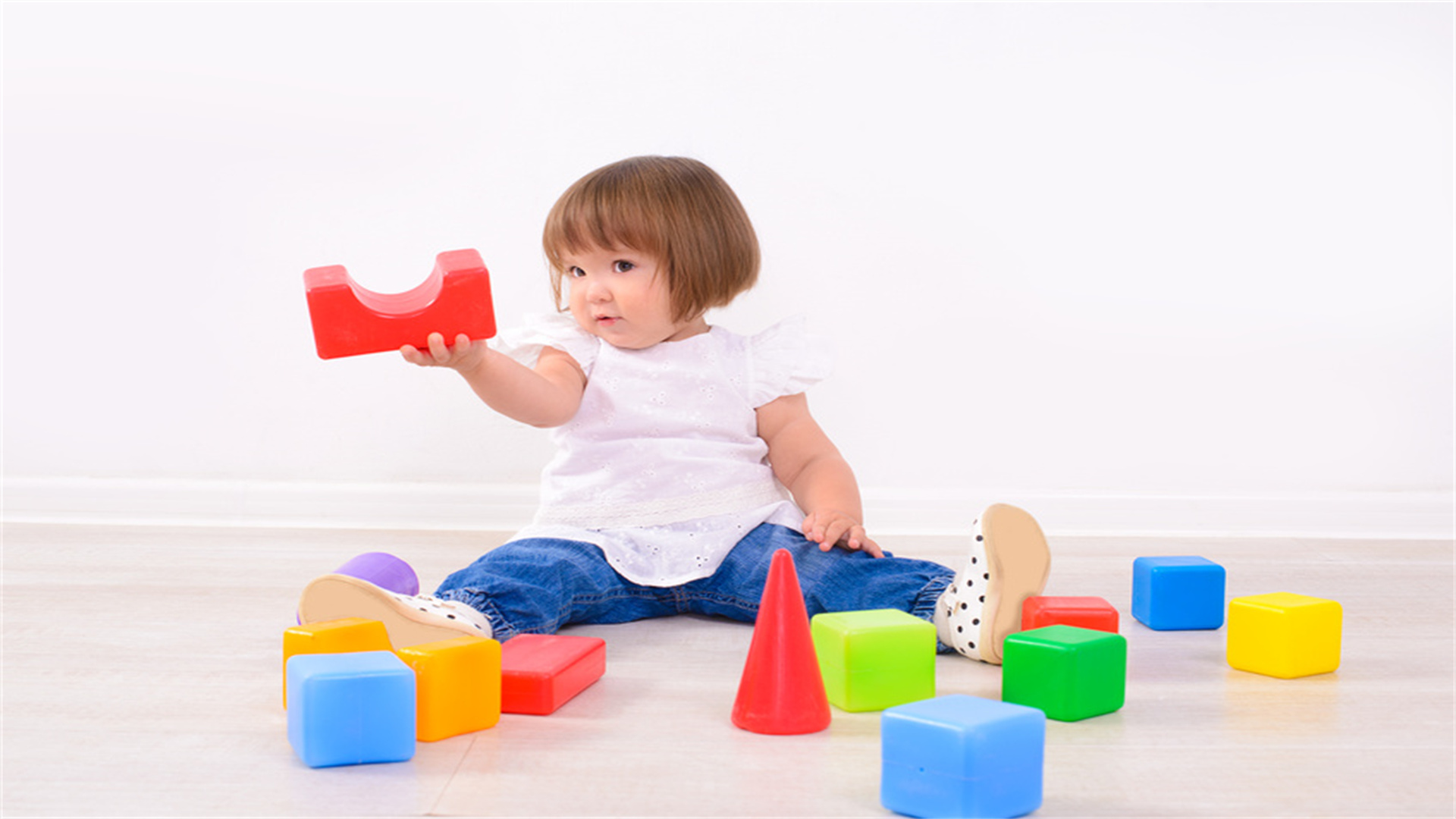
Stage 3: Shapes, Space & Spatial Reasoning 🔺
Geometry begins in the highchair! This stage is about understanding the attributes of shapes and how objects relate to each other and the space around them. Spatial reasoning is a strong predictor of future success in STEM fields.
1. 🔶 Shape Scavenger Hunt
Give your child a "shape card" (a circle, square, triangle, rectangle) and challenge them to find as many objects of that shape in your home as possible. A clock is a circle, a book is a rectangle, a slice of cheese is a triangle. This builds shape recognition in the environment.
2. 🧩 The Fort Challenge
Provide blankets, pillows, chairs, and cushions. Challenge your child to build a fort or a secret hideout. This engineering project requires understanding of space, structure, stability, and shape (using a rectangular blanket to create a triangular tent). It's geometry and physics in action.
3. 🗺️ Treasure Map Maze
Draw a simple map of a room or use blocks to create a maze on the floor. Give your child verbal directions to guide a toy car or figurine to the "treasure": "Move two steps forward, turn right, move one step forward." This develops an understanding of positional words (left/right, forward/back) and perspective.
4.✂️Tangram Tales
Using commercial tangrams or shapes you cut from colored paper, tell a story with the shapes. "The square is a house. Let's put two triangles on top to make a roof. The rectangle is a door. Can you make a tree with a triangle and a rectangle?" This encourages creative composition and analysis of how shapes fit together.
Stage 4: Patterns, Sorting & Sequencing 🔄
Recognizing and creating patterns is the cornerstone of mathematical reasoning. It helps children make predictions and understand order and rules. This stage moves from simple physical patterns to more abstract, representational ones.
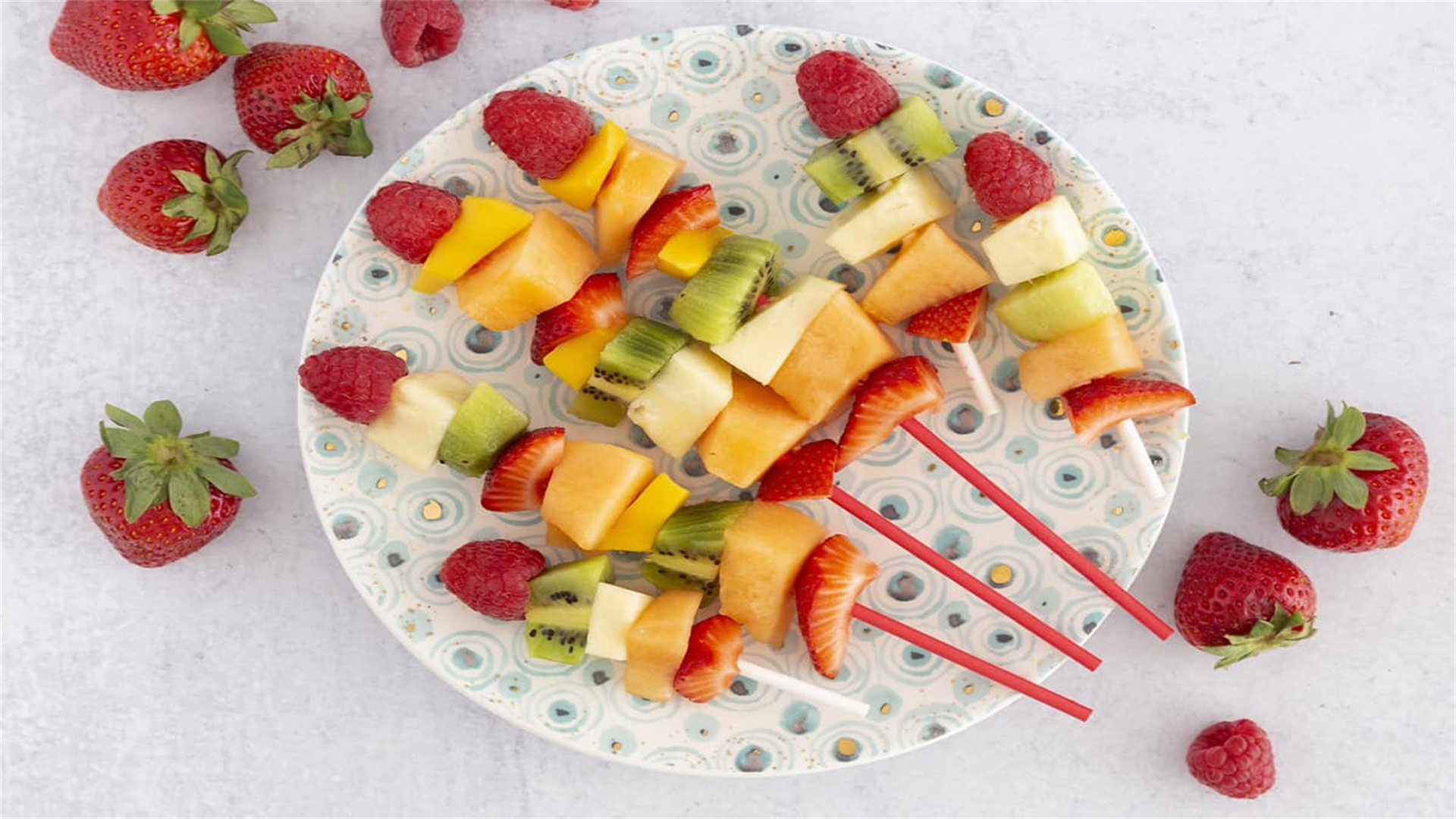
1. 🍎 Fruit Kabob Patterns
Use chunks of fruit (e.g., strawberry, banana, grape) to create edible patterns on skewers. Start a pattern like "strawberry, banana, strawberry..." and ask your child what comes next. Then let them create their own patterns for the family to enjoy. It's a tasty lesson in sequencing.
2. 🧦 The Pattern Machine
You are the "pattern machine." Create a repeating sound pattern by clapping and tapping (clap-clap-tap). Your child must repeat it. Then, switch roles. You can extend this to color patterns with blocks (red, blue, blue, red, blue, blue...). This hards auditory and visual patterning skills.
3. 🃏 Card Sequence Race
Using a deck of cards (just numbers 1-5), lay out a sequence like 2, 3, 4. Ask your child to find the card that comes next. Or, create a "what's missing?" game by laying out 1, 2, _, 4. This introduces numerical patterns and sequences.
4. 🌈 Nature Pattern Collage
Collect natural items on a walk: leaves, twigs, pinecones, flowers. Glue them onto paper in a repeating pattern. For example: leaf, twig, pinecone, leaf, twig, pinecone. This connects math to art and the natural world, emphasizing that patterns are everywhere.
Stage 5: Early Operations & Problem-Solving➕➖
This final core stage introduces the ideas of addition and subtraction as "putting together" and "taking apart"—not as memorized facts. The focus is on solving simple, concrete problems using manipulatives and stories.
1. 🐻 Teddy Bear Picnic Math
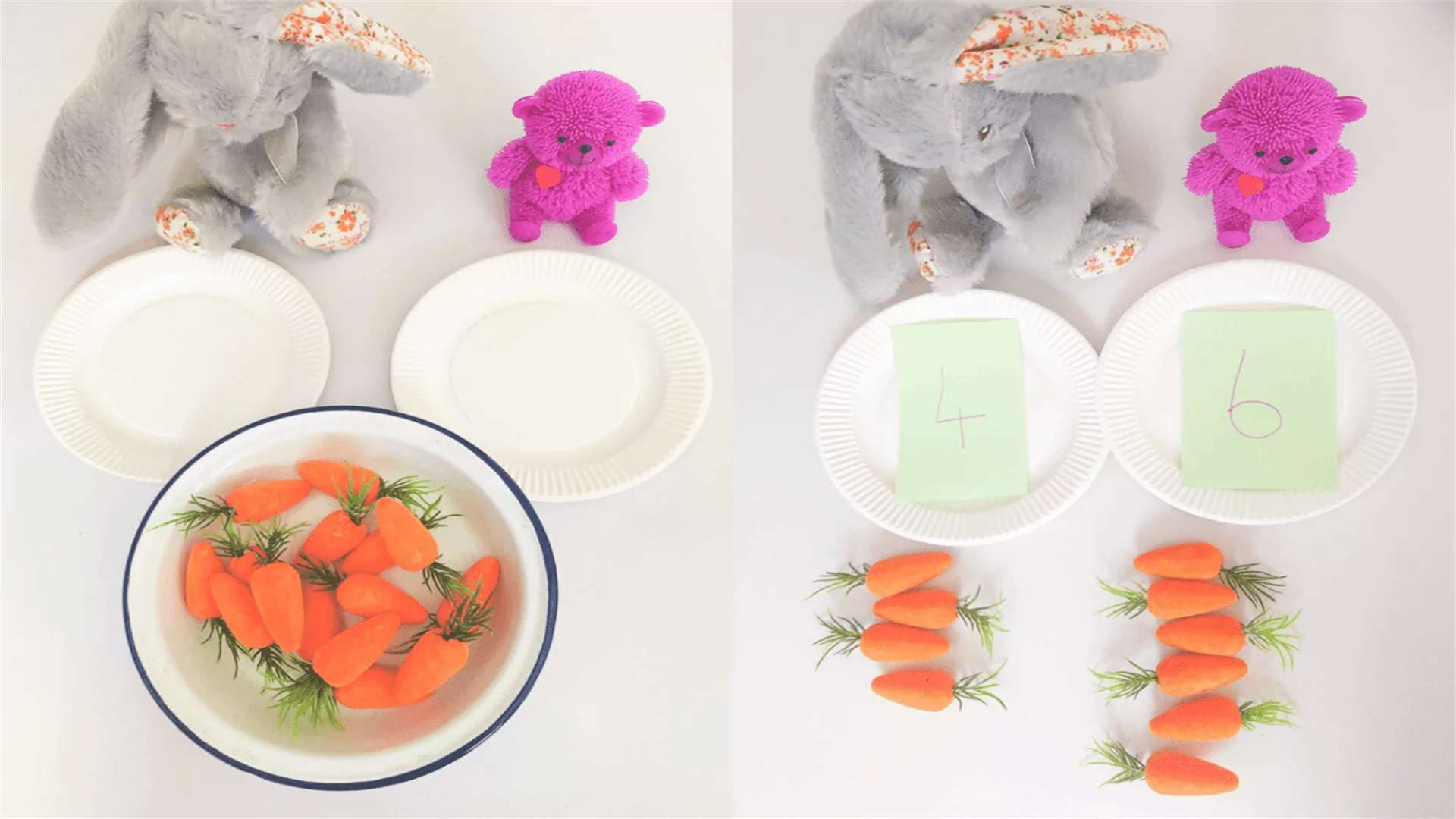
Set up a picnic for teddy bears. "There are 3 bears at the picnic. If 1 more bear joins, how many are there?" (Addition as joining). "The bears have 4 cookies. If they eat 1, how many are left?" (Subtraction as taking away). Use the bears and props to act it out.
2. 🍕 Pizza Sharing Fraction Fun
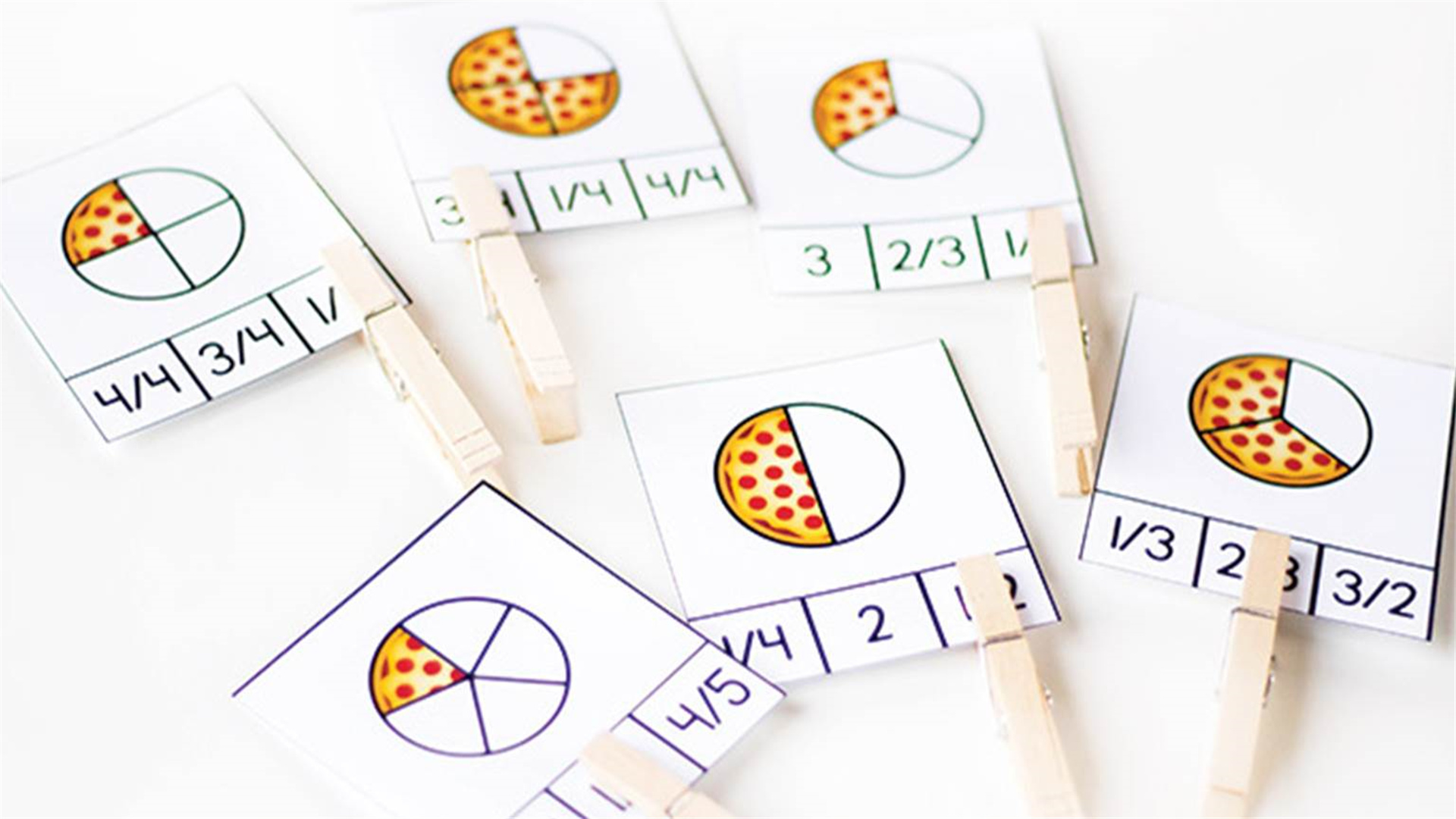
Use a paper plate to make a "pizza." Cut it into halves, and then into quarters. Use play food or real snacks. "We have one whole pizza. If we share it between the two of us, we each get a half." This introduces the concept of fractions as equal parts of a whole in a relatable context.
3. 🛒 Play Store Transactions
Set up a small store with toys or pantry items with price tags of 1 or 2 "coins" (use buttons or poker chips). Give your child 5 coins. They can buy items, and you can ask: "You have 5 coins. This toy costs 2. How many will you have left?" This teaches subtraction in a meaningful, role-play scenario.
4. 🧩 The "How Many Ways?" Challenge
Pose open-ended problems. "We need 5 blocks to build this wall. How many different combinations of big and small blocks can we use to make 5?" Or, "There are 4 people in our family. How many different ways can we pair up for a game?" This encourages flexible thinking and multiple solutions, the heart of problem-solving.
Conclusion: Weaving Math into the Fabric of Daily Life 🧶
Early math education at home is not a curriculum to be forced, but a lens through which to view daily play and routines. By understanding these five core stages—Sensory Awareness, Numbers & Counting, Shapes & Space, Patterns, and Early Operations—you can confidently guide your child's mathematical development. The 20 games outlined are merely starting points; let your child's curiosity lead the way. The most important number in this entire journey is "one": one patient adult, engaging in one playful moment at a time, building one confident and capable young mathematician. Remember, your goal isn't to teach drills, but to cultivate a mindset: a sense of wonder, a willingness to experiment, and the joyful understanding that math is everywhere, especially in the comfort of your home.
You May Have Missed

How to Cultivate Scientific Thinking in Children in Daily Life
In a world driven by innovation and discovery, scientific thinking is no longer a skill reserved for the lab coat-clad researcher. It is a fundamental mode of inquiry, a toolkit for understanding the world that empowers children to become curious, critical, and resilient problem-solvers. Contrary to popular belief, cultivating this mindset doesn't require expensive kits or a PhD; it flourishes through intentional yet playful integration into the fabric of daily life. Scientific thinking involves observation, questioning, hypothesizing, experimenting, and analyzing—processes that can be naturally woven into meals, playtime, walks, and even chores. This guide will explore practical, accessible strategies to transform everyday moments into fertile ground for nurturing the young scientist within your child, fostering a lifelong love for learning and exploration.

6 Key Habits for Vision Protection in Children Aged 0-6
Vision development in children aged 0-6 is a critical period that lays the foundation for lifelong eye health and visual acuity. During these formative years, the eyes and brain are rapidly developing, making it essential to establish protective habits early to prevent common issues like myopia, amblyopia (lazy eye), and other vision disorders. According to research from organizations like the American Academy of Ophthalmology, early intervention can significantly reduce the risk of permanent vision impairment. This article outlines six key habits that parents and caregivers can adopt to safeguard their children's vision. By integrating these practices into daily routines, we can promote healthy eyesight, support learning and development, and ensure children thrive in their visual world. The following sections delve into each habit, providing actionable insights backed by expert recommendations from international sources.

10 Traits for Identifying Highly Sensitive Children and Personalized Parenting Guidelines
Highly Sensitive Children (HSCs) are not simply "shy" or "difficult." They are born with a nervous system that is more deeply attuned to and processes sensory, emotional, and social information more thoroughly than others. This innate trait, present in roughly 15-20% of the population, is known as Sensory Processing Sensitivity (SPS). For these children, the world can feel louder, brighter, faster, and more emotionally intense. Understanding this biological basis is the first, crucial step away from mislabeling and towards supportive, personalized parenting. Recognizing an HSC is not about diagnosing a problem but about appreciating a unique neurotype—one that comes with significant strengths like deep empathy, creativity, and conscientiousness, alongside specific challenges. This article will outline ten key traits to help you identify if your child is highly sensitive and provide actionable, personalized parenting strategies to help them not just cope, but thrive.
We focus on sharing high-quality original content covering diverse fields such as technology & digital, life essays, and practical useful tips. We polish every article with care to bring you a warm and in-depth reading experience. Explore more interesting new knowledge only at FunLab666.
- Operator: STARFISH ENTERTAINMENT CO., LIMITED
- Address: FLAT/RM F428 4/F 36 TAI YAU STREET WAH HING INDUSTRIAL MANSIONS SAN PO KONG HONGKONG
- Contact: [email protected]